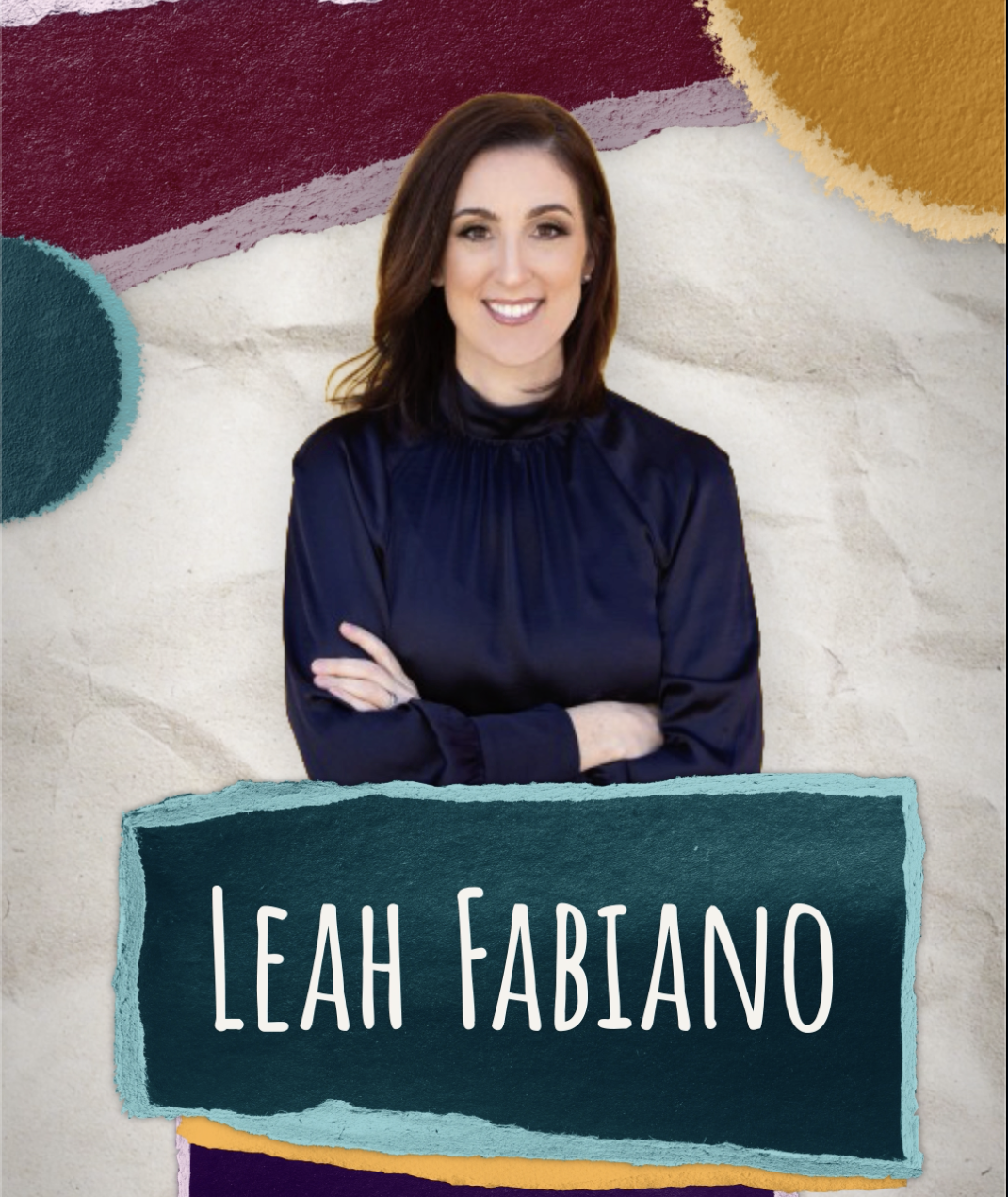
Who We Are Inside is back with season 2! In this week's episode, Susan and Dr. Leah Fabiano have a timely conversation about language, bilingualism, overcoming racist systems, and protecting our communities. It's a big one, and we're so glad you're here for it!


Susan:
Welcome to Who We Are Inside,
Susan:
a Cupid podcast.
Susan:
I'm so glad you're here.
Susan:
Welcome to Who We Are Inside,
Susan:
a Cupid podcast.
Susan:
Today I have with me Dr.
Susan:
Leah Fabiano,
Susan:
whose research program is committed to reducing the misdiagnosis of speech sound disorders in bilingual Latinx
Spanish-English speaking children and equitable means of assessment for all children,
Susan:
which is near and dear to my heart because I have a child with a speech language delay.
Susan:
With a strong focus on social justice through science,
Susan:
her diverse lab community works on developing and testing procedures for bilingual preschoolers that correctly
identifies those who need speech therapy services and those who don't.
Susan:
She's personally and professionally committed to structures of white supremacy.
Susan:
I have to admit,
Susan:
when I read this again last night,
Susan:
I was like,
Susan:
oh,
Susan:
is that a dirty word?
Susan:
Are we allowed to still say that?
Leah:
Oh,
Leah:
we have to say that.
Susan:
That's right.
Susan:
That's right.
Susan:
We do have to say it.
Leah:
We have to say it.
Susan:
It's just so interesting how like in a couple of years,
Susan:
how language is just experienced differently.
Susan:
I felt it in my body when I read it.
Susan:
I was like,
Susan:
I love this and it feels different than saying it in like 2021.
Leah:
Yep.
Susan:
So dismantling structures of white supremacy in the academy,
Susan:
which still exists,
Susan:
and training students in culturally responsive clinical practices.
Susan:
Leah,
Susan:
thank you so much for being here today.
Leah:
It's a pleasure.
Leah:
Thank you so much for the invitation.
Susan:
So I know that you're really interested in talking about your research with the Latinx community and your
experience working with children all across the country.
Susan:
But I was hoping we could start with kind of you.
Susan:
Can you tell us your story?
Susan:
How did you get into this space?
Leah:
Sure.
Leah:
So I am not Latinx myself.
Leah:
I am Italian and Irish American.
Leah:
So I am a white lady.
Leah:
And I think that's really important to say right out of the gate,
Leah:
don't let the Fabiano fool you that is Italian.
Leah:
And when I was in my undergraduate program,
Leah:
I started being placed in schools to get experience as a speech language pathology student.
Leah:
And where I went to my,
Leah:
where I did my undergrad at SUNY Fredonia,
Leah:
which is right,
Leah:
just about three hours north of here across the PA border in New York State,
Leah:
there are many,
Leah:
many vineyards.
Leah:
It's a very rural area.
Leah:
And workers from Mexico and Central America work there,
Leah:
and their children are in the schools,
Leah:
kind of the public schools.
Leah:
And so when I was placed in the public schools in that region,
Leah:
I worked with many Spanish-speaking children.
Leah:
And because I had studied abroad in Spain and I had entered college with a college Spanish course already.
Leah:
I had some Spanish skills and I ended up working with a lot of Spanish-speaking children.
Leah:
And through that experience,
Leah:
I learned a lot about the migrant worker experience in the U.S.
Leah:
and really started to learn about how different communities live in the U.S.
Leah:
And it was very different from the way that I grew up.
Leah:
And I grew up in a community that was very homogenous,
Leah:
very white,
Leah:
very monolingual English speaking,
Leah:
very even ethnically exactly the way that I was.
Leah:
And so that was a really big eye opening learning experience for me.
Leah:
And so when I moved on to get my master's degree and started working clinically in more urban populations and
more urban settings,
Leah:
I started becoming familiar with more and more Spanish-speaking communities,
Leah:
Puerto Rican community,
Leah:
you know,
Leah:
mixed communities from Central America.
Leah:
And I started to realize that there were different vectors of oppression that were coming to bear on these
communities that was very unlike the white pediatric communities that I had been working with.
Leah:
And so social justice became very central to what I was doing as a speech language pathologist.
Leah:
And when I was finishing up my clinical fellowship year,
Leah:
which is the year after your master's degree,
Leah:
I realized I had so many questions about how to assess and treat bilingual children.
Leah:
And I had no answers.
Leah:
I didn't have any mentors that knew how to mentor me.
Leah:
I had no training in bilingual speech language pathology.
Leah:
And so I thought,
Leah:
well,
Leah:
if I don't have any of these answers,
Leah:
I might as well go answer them myself.
Leah:
And so I applied to PhD programs and I was lucky enough to be admitted to Temple University in Philadelphia.
Leah:
And I went and worked with Brian Goldstein and Achilles Iglesias,
Leah:
who were at the time the leaders in the field of bilingual speech language pathology.
Leah:
And I trained with them.
Leah:
And that's really where I learned to become a bilingual speech-language pathologist was when I was working on
my research degree at the PhD level.
Leah:
So it wasn't even at the undergrad or master's degree,
Leah:
it wasn't until I was a PhD student that I really learned how to do bilingual speech-language pathology.
Leah:
So it was through that process I realized how common it is to misdiagnose bilingual children,
Leah:
both to over-identify and under-identify them,
Leah:
and how that misdiagnosis really places children on the wrong paths,
Leah:
both in terms of health disparities and educational disparities.
Susan:
So you had a clinical experience and realized that you weren't doing enough for your patients that you could
be,
Susan:
and that led you to get your PhD.
Susan:
Yes.
Susan:
Did I summarize that well?
Susan:
Yes.
Susan:
Wow.
Susan:
As like a fellow clinician,
Susan:
that is just so awesome.
Susan:
Like,
Susan:
you know,
Susan:
we think,
Susan:
I think that,
Susan:
you know,
Susan:
my PhD students are just starting their master's last week.
Susan:
And I think we think about and clinic as like two separate things.
Susan:
And I feel like your story really helps to remind us that they're actually really interconnected and that by
getting your PhD,
Susan:
you were actually able to strengthen your clinical practice and vice versa.
Susan:
I think so.
Speaker 1:
So,
Susan:
yeah,
Susan:
something we need to remember because I feel like we tend to just put research off on its own and that it
doesn't have as much implication in clinical practice.
Susan:
So I'm curious,
Susan:
like what were the things that you were seeing or have seen that are kind of the most important for us to
touch on in terms of how you approach bilingual children differently than monolingual children?
Leah:
So one of the main elements of my field is that the tools and methods that we use to assess,
Leah:
diagnose,
Leah:
and treat children are designed and normed on monolingual English-speaking children.
Leah:
And so when we use those approaches and we use those tools and we use those measures and we place them,
Leah:
you know,
Leah:
on top of bilingual children's communication,
Leah:
we're comparing apples to oranges.
Leah:
And that means that we are taking half of the language skills of bilingual children and comparing them to all
of the language skills of monolingual children.
Leah:
and we're making a judgment about how bilingual children communicate.
Leah:
And so if someone gave you an IQ test and they said,
Leah:
okay,
Leah:
you're only allowed to use half of your cognitive abilities to complete this IQ test.
Susan:
Yeah.
Leah:
Not all of your cognitive abilities,
Leah:
just half.
Susan:
Yeah.
Leah:
You probably wouldn't perform very well in that IQ test.
Leah:
You'd probably perform as if your IQ is not sufficient enough.
Susan:
Right.
Leah:
Right.
Leah:
That's what we're doing with bilingual children every day is that we have speech language pathologists who are
using tools that are normed on monolingual English speaking children.
Leah:
They're scoring those tests.
Leah:
They're reporting those scores for bilingual children.
Leah:
And unsurprisingly,
Leah:
bilingual children are not performing well on those tests.
Susan:
Yeah.
Leah:
Not because their linguistic skills aren't good.
Leah:
It's because we're only testing them on their English.
Leah:
We're not looking at what kind of skills they have or what funds of knowledge they have in Spanish.
Leah:
We're only looking at whatever skills they have and they can show us in English.
Leah:
When language skills are distributed unevenly across the two languages of bilingual children.
Leah:
So in order to get the full picture,
Leah:
we really need to be looking at both.
Leah:
So we have a fundamental clinical challenge in the field of bilingual speech-language pathology where not only
are the tools insufficient,
Leah:
the clinical methods are insufficient,
Leah:
and the clinicians are not trained.
Leah:
And we don't have many Spanish-speaking or bilingual clinicians because we have these filtering systems in
graduate programs,
Leah:
right,
Leah:
where we are only accepting students who fit a certain mold because they've gone to better schools and they
have more resources to,
Leah:
you know,
Leah:
provide better application materials and they have,
Leah:
you know,
Leah:
the means to apply to 10 different schools instead of just two,
Leah:
or they have the ability to move around the country to go to different programs.
Leah:
And so we have all of these factors that all come to bear on why we have this clinical problem happening.
Susan:
Yeah.
Susan:
So I'm curious,
Susan:
like,
Susan:
what does this look like for a parent?
Susan:
So my niece is bilingual.
Susan:
Her dad is from Colombia.
Susan:
My sister is from Pittsburgh.
Susan:
She goes to a bilingual daycare.
Susan:
And so I'm curious,
Susan:
like if you could give me like a test case of what my sister and her husband might experience with my niece,
Susan:
like what,
Susan:
what would that look like?
Leah:
So a teacher could say your child is really quiet.
Leah:
They're not talking enough,
Leah:
especially if the child says only Spanish at home or until they go to preschool.
Leah:
Yeah.
Leah:
The teacher could say,
Leah:
I'm concerned the child isn't following directions.
Leah:
I don't think the child's understanding.
Leah:
I don't think the child can hear.
Leah:
um i don't think you know i think your child needs to be evaluated um speak to your child only in english so
they're not confused you will hear that from doctors and speech language pathologists and teachers and
everybody under the sun it's the biggest myth in the whole world yeah um and so you'll hear all sorts of
things about bilingualism that's negative because monolingualism is the norm in the U.S.
Leah:
It's not the norm in the world.
Leah:
Pretty much anywhere else.
Leah:
The world is a multilingual place,
Leah:
right?
Leah:
The world is a multilingual place.
Susan:
Yes.
Leah:
But the United States is a very monolingual society.
Leah:
I mean,
Leah:
that's changing,
Leah:
of course,
Leah:
because by 2030,
Leah:
a third of U.S.
Leah:
schoolchildren will be Latinx.
Leah:
So that's changing,
Leah:
right?
Leah:
But as of right now,
Leah:
we still have this ideology that monolingualism is best.
Leah:
And if you have a bilingual child,
Leah:
there's some kind of danger that they won't learn English to the level that they need to learn English to
so-called be successful.
Leah:
And that's,
Leah:
you know,
Leah:
is going to make people nervous.
Leah:
The truth of the matter is,
Leah:
is that all children have the capacity to learn more than one language,
Leah:
whether they have a speech and language impairment or not,
Leah:
all children have the capacity to learn multiple languages.
Leah:
And what happens with monolingual children is they just max out at one.
Leah:
They're just not using their full linguistic capacity.
Leah:
They're just maxing out below the maximum level that they could possibly take advantage of,
Leah:
where bilingual children use more of that capacity.
Leah:
Trilingual children use more of that capacity,
Leah:
right?
Leah:
And so on and so on.
Leah:
So it's not that being bilingual is somehow weakening the communication of a child.
Leah:
Being monolingual is undershooting what a child is actually capable of.
Leah:
And so when we have these concerns coming from teachers and pediatricians and speech-language pathologists,
Leah:
it is mythology based in lack of knowledge and familiarity with a monolingual society and unfamiliarity with a
multilingual society.
Susan:
Yeah.
Susan:
And I was doing a little lit review last night to prepare.
Susan:
And so I'm curious,
Susan:
how does your work kind of intersect with this?
Susan:
You've been on teams that are developing the tools so that we can actually assess these kids accurately,
Susan:
right?
Leah:
Yes.
Susan:
Can you tell us a little bit more about that.
Leah:
Sure.
Leah:
So what we're trying to do is move away from standardized testing.
Leah:
Okay.
Leah:
Because what standardized testing does is it creates this so-called goal,
Leah:
right?
Leah:
And it tries to move all children and push all children towards this goal to say,
Leah:
this is what an acceptable communicator sounds like,
Leah:
right?
Leah:
And we're trying to do away with that because we think there's lots of different ways you can communicate and
be an effective communicator.
Leah:
We don't think there has to be one single way to communicate and that's the only way to communicate or that's
the perfect way to communicate or that's the only acceptable way to communicate.
Leah:
That there's lots of different ways to be a functional communicator.
Leah:
And so we're stepping away from that and we're looking more at ways of assessing children where we look and
see,
Leah:
okay,
Leah:
if we give children a set of items,
Leah:
which items are typical children likely to produce correctly and which items are children with speech sound
impairments likely to produce incorrectly.
Leah:
And we're using an approach called item response theory.
Leah:
And in this analysis,
Leah:
we are looking at an underlying,
Leah:
what we call a latent variable,
Leah:
which in this case would be speech impairment.
Leah:
And we're giving them items and seeing which items pick up on that latent variable and which items don't.
Leah:
So that we can give kids just a limited set of items that we know discriminate really well between typical and
impaired.
Susan:
And when you say items,
Susan:
you mean like assessment measures,
Susan:
right?
Leah:
Test items,
Susan:
yes.
Leah:
So what we do is we show children pictures,
Leah:
like a picture naming test.
Leah:
And we say,
Leah:
what is this?
Leah:
What is this?
Leah:
Or que es esto?
Leah:
Que es esto?
Leah:
And they're childlike items like a banana or a shoe or chancla or vaca,
Leah:
right?
Leah:
Different kinds of items in English and Spanish.
Leah:
And these words are chosen because they reflect the type and frequency of sounds in that language,
Leah:
like S or T or L or W,
Leah:
right?
Leah:
And we give children lots of opportunities to attempt these sounds to see how well they can produce the sounds
of their language.
Leah:
Yeah.
Leah:
And so when we give them,
Leah:
say,
Leah:
60 items in English and 60 items in Spanish,
Leah:
we want to know from those 60 items,
Leah:
which are the items that really discriminate well between children who are impaired and who aren't.
Leah:
And we'll pick only those items and give those to kids so that the test becomes quicker,
Leah:
easier,
Leah:
and more detailed and more focused on only those items that are really good discriminators.
Leah:
Yeah.
Susan:
Can you share a couple?
Susan:
I'm really curious.
Susan:
Do you mind?
Leah:
No,
Leah:
not at all.
Leah:
So we looked at the color words are really good discriminators.
Leah:
So blue,
Leah:
brown,
Leah:
red,
Leah:
yellow.
Leah:
And the reason is,
Leah:
is that these color words have what we call consonant clusters or blends in them like BR or BL.
Leah:
And yellow has L in it.
Leah:
L is also a really tough sound for kids to produce in English.
Leah:
So L and R in clusters are really difficult sound and sound combinations for English speaking children to
produce.
Leah:
So when we give them those words,
Leah:
usually kids with impairments will produce them in error.
Leah:
OK,
Leah:
so those those tended to be the words in English that showed us whether a child had an impairment or not.
Leah:
And when we looked at Spanish,
Leah:
we had words like fantasma.
Leah:
We had a word like fuego.
Leah:
We had another word that was rojo,
Leah:
where we had words with like flap and trill and S,
Leah:
which are also highly complex sounds in Spanish that children with impairment are likely to produce an error
as well.
Leah:
So we came,
Leah:
the words that kind of shook out from our analysis had sounds and sound combinations that were predictable for
us.
Leah:
But it was interesting that we that we found kind of like about eight to 10 words in both lists that were
really good,
Leah:
reliable sets of words.
Susan:
And that's quick.
Susan:
I mean,
Susan:
that takes,
Susan:
what,
Susan:
five minutes?
Speaker 1:
Oh,
Leah:
less than.
Leah:
You know,
Leah:
in both languages.
Leah:
Yeah.
Susan:
Yeah.
Susan:
As you were talking,
Susan:
I was I was trying to not I was getting distracted and I was trying to bring myself back,
Susan:
but I just remember Ben doing one of those,
Susan:
like,
Susan:
what is this?
Susan:
And he didn't know the word queen.
Susan:
And I realized it's like,
Susan:
he didn't,
Susan:
we don't ever talk about queens.
Susan:
Like that's just a weird word that maybe not,
Susan:
especially,
Susan:
I don't hate to like gender stereotype,
Susan:
but like a little boy might not know about a queen.
Susan:
And I just remember being like,
Susan:
he can make that sound.
Susan:
You just need like a different qua word.
Susan:
But anyway,
Susan:
that was just like my own little aside.
Leah:
And that happens.
Leah:
The kids never know wagon because kids don't have wagons much anymore.
Leah:
Wagons were something we had in the 80s,
Leah:
but like those red radio flyer wagons,
Leah:
like every kid had.
Leah:
Kids don't really have wagons anymore.
Leah:
So the kids don't know wagon.
Leah:
And there's an item that's telephone and nobody says telephone.
Leah:
Kids say phone.
Leah:
And so nobody says telephone.
Leah:
So sometimes we get the kids to just imitate us.
Leah:
We'll say,
Leah:
say telephone or say wagon because you're absolutely right.
Leah:
Sometimes they're items that the kids just don't know.
Leah:
Or we come across dialect differences too,
Leah:
where the kids will say,
Leah:
um,
Leah:
huarache for sandal,
Leah:
for chancla.
Leah:
And we'll say,
Leah:
si,
Leah:
si,
Leah:
tambien se llama huarache,
Leah:
pero tambien se llama chancla,
Leah:
dime chancla.
Leah:
And we'll say,
Leah:
yes,
Leah:
it's called a huarache,
Leah:
but we also call it a chancla.
Leah:
Can you say chancla?
Leah:
And we'll have them say it.
Leah:
Yeah.
Leah:
Say the word,
Leah:
the target word that we're looking for because we're looking for that specific sound structure.
Susan:
Right.
Leah:
So they can't say another word.
Leah:
They have to say queen,
Leah:
for example.
Susan:
Yeah.
Susan:
It's so fascinating.
Susan:
Yeah.
Susan:
And I think that maybe gets into another piece of your research that I thought was so fascinating,
Susan:
which is this idea and advocacy for having a member of the community as part of the research team to analyze
the results.
Susan:
Can you speak more about that?
Leah:
Absolutely.
Leah:
So you have to have cultural insiders to really understand what you're looking at when you are working with a
minoritized community.
Leah:
Because there are patterns in the data that I will never pick up on because I'm not a member of the community.
Leah:
I'm not a heritage speaker of Spanish.
Leah:
I am not Latinx.
Leah:
I will not see patterns in the data that my research team will.
Leah:
And so it's really important that my research team is made up of members of the Latinx community,
Leah:
undergraduate students,
Leah:
graduate students,
Leah:
scholars,
Leah:
my collaborators have to be members of that community or else my research is going to be subpar.
Leah:
If you have a white research team doing research on a Latinx community or with a Latinx community,
Leah:
they will miss a lot of information.
Leah:
And I've published my own research and done my own reanalyses with my doc student,
Leah:
Brendan Garibaldo,
Leah:
who's a member of the Latinx community,
Leah:
and found missing information in my own research studies because I didn't have a member of the Latinx
community with me doing that work.
Leah:
And so I think it's super important that we recognize that members of the community have funds of knowledge
about their own community and about their own language use that outsiders do not have.
Leah:
And that if we are really going to do our due diligence in interpreting those data,
Leah:
we need people who actually know what they're talking about interpreting those data.
Susan:
Yeah.
Susan:
Can you give us an example?
Leah:
Yeah,
Leah:
absolutely.
Leah:
So when we were going back,
Leah:
Brandon and I were going back through some of my own my own studies and I went back and I checked with my
colleagues and they said,
Leah:
please go ahead,
Leah:
take a look at our studies and see what you found.
Leah:
One of the things that we talked about was this whole conceptualization of comparing bilinguals to
monolinguals.
Leah:
And this is something that we did for many years.
Leah:
And this is something reviewers required us to do for many years,
Leah:
is look at the data that came from our bilingual children and compare it to monolingual English speakers to
see,
Leah:
okay,
Leah:
does the English of bilinguals pattern like the,
Leah:
like the English of monolingual English speakers?
Leah:
Does it look similar?
Leah:
Does it look different?
Leah:
How is it different?
Leah:
How is it similar?
Leah:
What is the rate of acquisition in the English of bilinguals?
Leah:
You know,
Leah:
how is it faster or slower at the same rate as monolingual English speakers?
Leah:
And when we went back,
Leah:
Brandon brought up the idea that when we're always comparing bilinguals to monolinguals,
Leah:
what we're really doing is holding monolinguals up as this gold standard.
Leah:
And we're comparing bilinguals to this monolingual gold standards as if monolinguals have a complete English
system and bilinguals don't.
Leah:
And that bilinguals should be striving to be like monolinguals.
Leah:
And that was really the message we were sending.
Leah:
It was more of a deficit model framing than it was just looking at bilinguals as bilinguals in their own
right.
Leah:
And just saying bilinguals are bilinguals.
Leah:
We don't need to compare them to anyone.
Leah:
We can just look at their language development as a group.
Leah:
Right.
Leah:
But this this forced comparison to monolinguals was really stemmed from that,
Leah:
again,
Leah:
that familiarity with the monolingual society and environment saying this data is meaningless unless we can
look at it in light of monolingual speech and language acquisition.
Susan:
So interesting because I'm very,
Susan:
very new to research,
Susan:
as you know,
Susan:
and it seems like a really bad control.
Leah:
Yeah.
Susan:
Like an apple should not be a control for an orange,
Susan:
right?
Susan:
Whereas if you're using,
Susan:
you know,
Susan:
bilingual children who do not have any measurable delays or deficits with bilingual children who do,
Susan:
that to me makes just a lot more theoretical sense.
Susan:
So I feel like it highlights kind of the delusion of that,
Susan:
you know,
Susan:
white supremacy we were talking about that like,
Susan:
This should be the standard.
Susan:
It doesn't.
Susan:
Wow.
Susan:
So it sounds like you were able,
Susan:
maybe along with some of your colleagues,
Susan:
to really push back on reviewers and say this just is bad science.
Susan:
Is that sort of what happened there?
Leah:
That's what happened.
Leah:
We finally said we're not doing this anymore.
Leah:
We're not making these comparisons anymore.
Leah:
They're not yielding us any information.
Leah:
This is not meaningful.
Leah:
Bilinguals as a group,
Leah:
we're just looking at them as a group of speakers.
Susan:
Yeah.
Leah:
And that's it.
Susan:
Yeah.
Leah:
And I think the other thing is,
Leah:
is that when we looked at the monolingual research,
Leah:
nobody ever asked what dialect do the monolingual English speakers speak?
Leah:
What region are they from?
Leah:
Do they have an accent?
Leah:
Are they speaking African-American English?
Leah:
Are they using Southern white English?
Leah:
Are they a California dialect?
Leah:
Nobody ever asked any questions.
Leah:
It was just default monolingual English speaker,
Leah:
almost default control with no questions asked.
Leah:
Yet when we had our bilingual speakers in the studies,
Leah:
they said,
Leah:
what's their percent input?
Leah:
What's their percent output?
Leah:
Where it's the region?
Leah:
What's the history of the region?
Leah:
What variety of Spanish do they speak?
Leah:
What variety of English do they speak?
Leah:
What's the what's this dialect?
Leah:
What's that dialect?
Leah:
What did the parents speak?
Leah:
Right.
Leah:
They had us answer a million demographic questions about the bilingual children.
Leah:
Yet the studies looking at monolingual English-speaking children,
Leah:
all they said was,
Leah:
this is a group of monolingual English-speaking children,
Leah:
right?
Leah:
And so everybody just accepted the default English speaker without any questions asked,
Leah:
which just goes to show how that white so-called invisible default is just accepted in science as just
neutral.
Leah:
And any other type of speaker,
Leah:
and especially because bilingual children are usually children of color,
Leah:
we get 101 questions asked about them.
Susan:
it's funny I was trying to think like where what region in the U.S.
Susan:
has this like very neutral you know kind of typical normal whatever English and I'm like I don't know where I
would pick it's certainly not Pittsburgh no and then you think about kind of other countries whose you know
heritage language is English like the U.K.
Susan:
and Ireland and you know Australia and New Zealand And you're like,
Susan:
that is all relevant.
Susan:
It's like this mythical being concept of like kind of white monolingual English that actually doesn't exist.
Susan:
But yet,
Susan:
and I'm thinking about like how this then plays out in judgment of people and their like knowledge and how,
Susan:
you know,
Susan:
outside of research and clinical practice,
Susan:
you know,
Susan:
oh,
Susan:
your English is so good.
Susan:
It's like we have an idea of what it is,
Susan:
but there's actually,
Susan:
it doesn't really exist except in a way to judge and really put down people for not adhering to some norm that
we've made up.
Leah:
Yes.
Leah:
I mean,
Leah:
think about how people talk about accents.
Leah:
Yeah.
Leah:
Broken English.
Leah:
Yep.
Leah:
Or,
Leah:
you know,
Leah:
their English is not good.
Leah:
Their English is bad.
Leah:
Or they don't speak English very well.
Leah:
Right.
Leah:
There are all these names and labels we give to people with accents.
Leah:
When in reality,
Leah:
if you think about it,
Leah:
an accent is a sign of bravery.
Leah:
People who speak with an accent have a whole other set or often many sets of codes of linguistic information
that they have the fluidity to use in different linguistic environments.
Leah:
Yeah.
Leah:
And when they're speaking to you in English,
Leah:
that's just one,
Leah:
right?
Leah:
But yet we judge accents as if they're somehow lacking,
Leah:
right?
Leah:
When in reality,
Leah:
when someone's communicating with you,
Leah:
even when they have an accent,
Leah:
you understand what they're saying to you.
Leah:
The communication is completely functional.
Leah:
And that's what communication is about.
Leah:
It's about function.
Leah:
It's not about perfection.
Leah:
Language belongs to the people.
Leah:
It's not about grammar and saying things perfectly and saying things a certain way and standard English and
talking like the people do on the news.
Leah:
Nobody talks like that.
Leah:
Yeah.
Leah:
Right?
Leah:
Language and communication belongs to the people.
Leah:
We use language and language changes all the time to serve us as people and our communication needs.
Leah:
And so to try and fit people into a box and say,
Leah:
your communication should sound like this.
Leah:
It's just being the grammar police.
Leah:
And it's so silly when I see people online correcting people's how they spelled your and your or like how
they've,
Leah:
you know,
Leah:
they're picking on people saying,
Leah:
oh,
Leah:
you know,
Leah:
this accent or that accent or people from the South sound like this or people from New York City sound like
this.
Leah:
it's so silly because it's all that language is functional.
Leah:
All that communication functions just fine.
Leah:
Everybody's communicating.
Leah:
So why are you picking on how somebody wrote it or how somebody said it as if there's some best way to do it?
Susan:
Oh,
Susan:
man.
Susan:
Yes.
Susan:
I love this language is for the people.
Susan:
I think that we forget about that.
Susan:
And I'm going to get sidetracked a little bit here,
Susan:
particularly in graduate programs.
Susan:
I mean,
Susan:
how many times have you heard like,
Susan:
this email tone was unprofessional?
Susan:
And maybe,
Susan:
maybe we could actually define characteristics that make it unprofessional.
Susan:
Or we could maybe say,
Susan:
you know,
Susan:
if you're going to send me an email,
Susan:
I'd appreciate if you do it this way,
Susan:
because that's how I feel comfortable.
Susan:
But it's these kind of holding folks to this particular nebulous standard and then using that standard as a
way to judge and demean rather than as maybe a way of kind of exploring,
Susan:
okay,
Susan:
well,
Susan:
why do I want it this way?
Leah:
Because professionalism is also rooted in white supremacy.
Susan:
Amen.
Leah:
Amen.
Leah:
So what we consider to be professional,
Leah:
dress,
Leah:
hair,
Leah:
communication,
Leah:
all of that,
Susan:
Yep.
Leah:
Is rooted in white supremacy standards.
Leah:
Yep.
Leah:
So when you hear people say things like that,
Leah:
it's like using an x-ray.
Leah:
You know exactly what they mean.
Susan:
Yeah.
Leah:
So what I say to students when I talk about professionalism,
Leah:
and as I say,
Leah:
everybody in this room is going to have a different definition of what professional means.
Leah:
I want you to cultivate your own definition of what professional is.
Leah:
And I want you to bring your professional self into the clinic.
Leah:
That might look different for each and every one of you.
Leah:
But when you trust students who are from all different backgrounds,
Leah:
who have all different races,
Leah:
ethnicities,
Leah:
different socioeconomic levels,
Leah:
when you trust them to bring their professional selves,
Leah:
they do.
Leah:
They do.
Leah:
And so that's going to look differently,
Leah:
right?
Leah:
If you look,
Leah:
the black community has different standards for professionalism than the white community does,
Leah:
right?
Leah:
That's true for all different communities,
Leah:
right?
Leah:
No community is monolith,
Leah:
right?
Leah:
But professionalism in the academy,
Leah:
remember,
Leah:
the university system is one of the oldest structures of white supremacy in the US.
Leah:
So it is going to have the professionalism standards that we know are rooted in those white supremacy metrics.
Susan:
Right.
Leah:
So we need to come in saying,
Leah:
yes,
Leah:
we want people to be interacting with the public in a professional way.
Susan:
Right.
Leah:
But that doesn't have to look the same way for everyone.
Susan:
Right.
Susan:
Right.
Susan:
Gosh,
Susan:
I feel like we could have a whole nother episode on that.
Leah:
We could.
Susan:
I'm going to need to bring you back because this is like the hill I'm willing to die on at work.
Susan:
So I came across this definition,
Susan:
I wanted,
Susan:
I was hoping you would,
Susan:
you would kind of share for us.
Susan:
I'm going to,
Susan:
well,
Susan:
actually,
Susan:
I'll start with a couple goals that you outlined that I think are really important as we're thinking about
kind of professionalism and also recognizing that different marginalized groups have different definitions
that are kind of important to them in general.
Susan:
And you talked about this in the introduction to the research symposium on bilingual forum.
Leah:
Yeah.
Susan:
Well,
Susan:
first of all,
Susan:
I want to I loved this quote,
Susan:
as you said,
Susan:
bilingualism and multilingualism in the pediatric population is now the norm rather than the exception in most
of the country,
Susan:
which and this was in 2022.
Susan:
So I imagine that's even more true today than it was then.
Susan:
I think that's really important for clinicians,
Susan:
but also,
Susan:
you know,
Susan:
educators and researchers to keep in mind that like this isn't a minority anymore.
Susan:
And so you outline kind of two goals that we should include racially and ethnically minoritized children as
populations in all study samples and that we need to highlight the value added when scholars of color research
children within their own communities of origin.
Susan:
And so I'm curious,
Susan:
you know,
Susan:
this was in 2022.
Susan:
Now we're in 2026,
Susan:
which is still weird to say.
Susan:
How have you seen things shifted?
Leah:
Well,
Leah:
very slowly.
Leah:
I did just have one of my students do a literature search on publications in the journals of the American
Speech Language and Hearing Association just in the year of 2024.
Leah:
and looked at the number of peer-reviewed journal articles that included bilingual children with impairments,
Leah:
with communication impairments in their study samples.
Leah:
And it was very low.
Leah:
And I'm not going to quote the percentage correctly,
Leah:
but it's about 15% of all the articles published in 2024,
Leah:
only 15% included bilingual children with communication impairments in their study samples.
Leah:
So it's not changing quickly.
Leah:
I think we still have this idea in research that we need to distill our study samples to monolingual English
speakers to keep that controlled for.
Leah:
Yeah.
Leah:
And that is still the default across many,
Leah:
many child language researchers.
Leah:
They think looking at bilingual children is too messy,
Leah:
muddies the water.
Leah:
It's too difficult to look at,
Leah:
you know,
Leah:
structures if there's influence of another language and it gets too difficult to interpret.
Leah:
But that makes it very difficult to generalize the results of your study to the general population.
Susan:
Right.
Leah:
Because if a third of your public school children in 2030 are Latinx and are exposed and using exposed to and
using Spanish,
Leah:
how are you going to use those studies to apply to them?
Susan:
Right.
Leah:
So I don't really know how the how those studies are going to have utility moving forward in our field if they
don't include bilingual children in their study samples.
Susan:
Yeah.
Leah:
And so we are really seriously behind.
Leah:
If in 2024,
Leah:
only 15 percent of our peer-reviewed journal articles are including bilingual children with impairments in
their study samples,
Leah:
we've got so much catching up to do.
Leah:
And it's not going to happen in time.
Susan:
Yeah.
Leah:
So we have a big problem in our field.
Susan:
Yeah.
Susan:
When you think about the time it takes to translate research findings into like implementation and clinical
practice too.
Susan:
You're right.
Susan:
We're already,
Leah:
we've missed it.
Susan:
We missed 2030.
Leah:
We've missed it.
Susan:
So obviously we don't have a lot of data to like support how we support these kids.
Susan:
Is that a fair statement in general?
Leah:
Yeah.
Leah:
I mean,
Leah:
even if we filled every single graduate program with a bilingual English speaking graduate student right now,
Leah:
even if we had the tools available now,
Leah:
we still would not be able to meet the needs of the community right now because the community is growing at a
rate that is so disproportionate to what the field is able to provide.
Leah:
And that's been a conscious choice.
Leah:
I'm not saying that the field is just some helpless entity that just can't help it.
Leah:
No,
Leah:
this has been a conscious choice,
Leah:
right?
Leah:
This is intentional.
Leah:
The field could have intentionally solved this problem and it has not.
Leah:
So we have made our bed and now we're going to lie in it.
Leah:
But the problem is that it's the community that suffers because I think that there are many in the clinical
community that think business as usual is just fine.
Susan:
Right.
Leah:
And that the status quo is just fine.
Leah:
And they've been doing this this way for this long.
Leah:
And,
Leah:
you know,
Leah:
why do we have to change things?
Leah:
You know,
Leah:
I've had I had a student recently email me who was one of my master's students.
Leah:
She graduated probably about five years ago.
Leah:
She emailed me recently.
Leah:
She is an SLP in Idaho.
Leah:
And she said,
Leah:
Dr.
Leah:
Fabiano,
Leah:
I'm really struggling.
Leah:
I'm in a school district.
Leah:
The majority of my caseload are Latinx bilingual children.
Leah:
I know that I know how to assess them the right way because I took your class.
Leah:
But the special education department is not allowing me to use these methods.
Leah:
It's they want me to use these standardized test scores.
Leah:
They want me to report these.
Leah:
I know this is not right.
Leah:
I know this is not the way to do it.
Leah:
They're pushing back on me.
Leah:
They're not allowing me to practice in the way that I want to.
Leah:
But it's bureaucratically easier for these systems to use these bad methods of practice.
Leah:
It's easier for them to make budgeting decisions using these bad methods of practice than it is for them to
use the right methods.
Leah:
And so you have a lot of pushback even on the SLPs who are trying to do the right thing,
Leah:
who have the training,
Leah:
who are using the right tools.
Leah:
They're getting pushback.
Leah:
And so she's like,
Leah:
I don't even know what to do.
Leah:
Like,
Leah:
what do I do?
Leah:
And so this is,
Leah:
it's a problem,
Leah:
it's a problem on so many levels because we,
Leah:
now we have this whole political element of we are not going to help these minoritized groups because we don't
even feel like they should be here,
Leah:
right?
Leah:
So now we have an active antagonistic element.
Leah:
I mean,
Leah:
it's always been there.
Leah:
Don't get me wrong.
Leah:
It's always been there,
Leah:
but it is emboldened at this point.
Leah:
And so where it used to be more subtle,
Leah:
it's now overt.
Leah:
And so now the SLPs who are really trying to push back are just being removed from their positions.
Leah:
And so it's even more difficult,
Leah:
I think,
Leah:
than it's ever been.
Susan:
I had so many thoughts.
Susan:
I have so many thoughts kind of spinning off of that.
Susan:
I think,
Susan:
so,
Susan:
you know,
Susan:
as a mom with a child who's in kind of the AIU system and recognizing how much parents need to fight for every
little thing for their kids,
Susan:
particularly their kids with disability or delay,
Susan:
it sounds like really one thing that like the community could do and like our listeners could do is to start
advocating at the school district level for these assessment measures.
Susan:
And,
Susan:
you know,
Susan:
I think about some of the things that like seem to make budgetary sense on the front end,
Susan:
but make absolutely no budgetary sense on the back end.
Susan:
And it's like if you're over diagnosing the amount of money that you're spending on services is so much
compared to if you just use the right test,
Susan:
then you could reassure.
Susan:
Not to mention,
Susan:
I mean,
Susan:
to say nothing of like the fear and anxiety and like trauma of the parents who think there's something,
Susan:
you know.
Susan:
Yes.
Susan:
I don't want to say wrong with their kid,
Susan:
but that their kid is struggling,
Susan:
you know,
Susan:
with speech when they actually aren't.
Susan:
That can't be understated,
Susan:
but often isn't talked about.
Susan:
And so it just seems very,
Susan:
very short-sighted.
Susan:
Without wanting to,
Susan:
like,
Susan:
incriminate your former student or yourself,
Susan:
what advice did you give her?
Leah:
I said,
Leah:
look,
Leah:
you have two options.
Leah:
I said,
Leah:
you can quit that job and you can move on to another position.
Leah:
You have nothing to feel bad about.
Leah:
your hands are tied when it is just you and you have this whole system pushing back against you,
Leah:
it's impossible for you to win.
Leah:
You can go try and do good in another environment.
Leah:
Don't feel guilty about it.
Leah:
It's on them for doing this.
Leah:
I said,
Leah:
that is one option.
Leah:
I said,
Leah:
your second option is to ally up.
Leah:
Find allies in high administrative positions,
Leah:
either school psychologists or superintendents or other allies in other schools in your district that will
back you up because you can't do this alone.
Leah:
You can't fight this alone.
Leah:
You need to have allies with you.
Leah:
And you are going to have to form a coalition.
Leah:
You're going to have to find other SLPs that are willing to push back in the same way.
Leah:
And you are going to have to like really hold the line on it.
Leah:
It's one or the other.
Leah:
you can't be wishy-washy because then you're sure to fail so you either have to go in hard yep or you have to
leave it's one or the other and i said i will not i'm not will not shame you for protecting your mental health
and taking a position someplace else right because sometimes the system these systems are very strong they're
very old and one person is not going to change them.
Leah:
But if you can,
Leah:
if you can create a coalition in your district,
Leah:
you can get enough people on board to fight with you.
Leah:
You have a chance of changing something.
Susan:
Oh,
Susan:
man,
Susan:
it's tough.
Susan:
That is.
Leah:
And that's just one example.
Leah:
I mean,
Leah:
this happens all over the country every day.
Susan:
And I'm imagining so my like,
Susan:
as I was thinking about the potential solution it actually probably is the wishy-washy one,
Susan:
which is like you do the assessment that they want,
Susan:
and then you actually treat based off of the validated one.
Susan:
Is that the wishy-washy,
Susan:
like just kind of under the table option?
Leah:
My problem is that when you report scores that are not reflective of a child's true abilities,
Leah:
and you have the risk of putting them in special education when they aren't actually impaired.
Susan:
Yeah,
Susan:
so there's downstream effects.
Leah:
And then you have those downstream effects.
Leah:
Right.
Leah:
And when you when you give a child,
Leah:
especially a child of color,
Leah:
a label of having a disability when they don't actually have a disability there,
Leah:
you put them in danger of of that that intersectionality of disability with color.
Leah:
And then you have criminal justice system interaction with that.
Leah:
Right.
Leah:
We don't and we don't want undereducation of children who are typically developing,
Leah:
right?
Leah:
We don't want them pulled out of class for speech services they don't need.
Leah:
The number one predictor of post-school outcomes is access to the general education curriculum.
Leah:
And so we don't want a third of our public school children to not have access to the general education
curriculum,
Leah:
right?
Leah:
So we want them to be fully engaged in our educational system.
Leah:
So we don't want we don't want our minoritized or ethnically minoritized children to be undereducated as a
group.
Susan:
Right.
Leah:
Right.
Leah:
And then the children who maybe are not identified and should be identified.
Leah:
Right.
Leah:
Those kids are not getting services that they need.
Susan:
Right.
Leah:
And when you have children who are not getting the services that they need,
Leah:
we have long term behavioral problems.
Leah:
We have long term reading problems.
Leah:
We have long term academic issues.
Leah:
Right.
Susan:
Yeah.
Leah:
And on both sides of that coin with the misdiagnosis issue.
Leah:
So it's really important we get the diagnosis right and that we're not getting something on the books that
doesn't truly reflect that child's true abilities.
Susan:
Yeah,
Susan:
that makes a whole bunch of sense.
Susan:
I was thinking about it more,
Susan:
this is like very off topic,
Susan:
but back in the day,
Susan:
I don't think it's the case anymore.
Susan:
But there was a local hospital where women could not get contraception.
Susan:
So a lot of them ended up with PCOS,
Susan:
polycystic ovarian syndrome.
Susan:
So they could be treated for their syndrome.
Leah:
With birth control.
Leah:
Yes.
Susan:
Yep.
Susan:
So that's sort of where I was thinking of like,
Susan:
do people get creative so that kids can get what they need?
Susan:
Yeah.
Susan:
I get it.
Leah:
And I'm not against But that,
Susan:
no,
Susan:
that makes sense is this,
Susan:
it's,
Susan:
it becomes like part of their official record.
Susan:
And then that,
Leah:
yeah,
Susan:
creates a whole bunch of problems.
Susan:
So I think that I want to come back to one of the myths you,
Susan:
you talked about,
Susan:
which was this idea that,
Susan:
you know,
Susan:
we should,
Susan:
we should focus only on English in a bilingual child who,
Susan:
you know,
Susan:
we think maybe has some delay.
Susan:
And it reminded me,
Susan:
I don't know.
Susan:
I'm curious if this is like a similar analogy.
Susan:
So when Ben was in speech in early intervention,
Susan:
his one speech language therapist said,
Susan:
let's get him an AAU,
Susan:
which is an augmentative and alternative communication device,
Susan:
AAC,
Susan:
sorry,
Susan:
that will help him speak.
Susan:
and the other one we had two because he was very fortunate he got one at school which was in the city limits
and one in our home and she was like oh no if you do that he won't speak no that's not true and so i'm
thinking it's the same right with spanish and english or with any language it's like if you're if you're
helping to a child to communicate in different modalities that will only help them communicate better in both
of those modalities
Leah:
aac devices that's a total myth too. AAC devices build language.
Susan:
Right.
Leah:
That does not prevent a child from speaking.
Leah:
It is way easier to open your mouth and speak than it is to use an AAC device.
Leah:
Right.
Leah:
It is way quicker,
Leah:
way more efficient to open your mouth and speak than it is to use an AAC device.
Leah:
Yeah.
Leah:
If children can speak,
Leah:
they will.
Leah:
They will before they're using an AAC,
Leah:
before using an AAC device.
Leah:
They're going to opt for that.
Susan:
Yeah.
Leah:
Before using an AAC device.
Leah:
But if you deprive them of the AAC device,
Leah:
You're depribing them of language development.
Leah:
You know,
Leah:
you're depriving them of communication.
Leah:
You're taking off.
Leah:
You're taking away their ability to learn new vocabulary words,
Leah:
right?
Leah:
Which,
Susan:
which is the same if you're deprives them of Spanish.
Susan:
Yes.
Leah:
You're depriving them of culture,
Susan:
right?
Leah:
You're depriving them of talking to their grandparents.
Leah:
You're depriving them of being able to communicate about the things in their world,
Leah:
right?
Leah:
You're depriving them of being able to go back to Mexico in the summer and play with their peers,
Leah:
right?
Leah:
Yeah.
Leah:
You're depriving them of their whole identity.
Leah:
Language is identity.
Leah:
That's a great point.
Leah:
them of who they are when you take their language away from them.
Leah:
I think the saddest lecture I give is on language loss.
Leah:
And it's always the one that I get choked up about.
Leah:
And it,
Leah:
you know,
Leah:
I talk about a lot of things that are,
Leah:
that are heartbreaking when you talk about,
Leah:
uh,
Leah:
racism and you talk about,
Leah:
uh,
Leah:
oppression and you talk about children in these systems.
Leah:
But the saddest,
Leah:
The saddest lecture I give is on language loss because I even get emotional talking about it.
Leah:
Because when you take away language,
Leah:
you take away someone's language and you don't support it in the schools and you watch these children who grew
up as Spanish speakers and whose parents taught them Spanish.
Leah:
That's their mother's language.
Leah:
That's the language their mother spoke to them when they were babies.
Leah:
And you watch it disappear when they get into school.
Leah:
You watch a piece of the history of that family disappear.
Leah:
You watch a piece of the identity of that child disappear,
Leah:
who they are,
Leah:
who that family was,
Leah:
what they came from.
Leah:
And I just,
Leah:
there's something about that that is just so heartbreaking to me.
Leah:
that the U.S.
Leah:
school system is so okay with that,
Leah:
that we are so over-concerned with English,
Leah:
that it is so okay that that Spanish just dies and that we don't care about that,
Leah:
that the number one priority is that they speak in English and that they understand English so that they can
be a successful contributor to capitalism and that nobody cares that Spanish is a part of that family and that
if it withers and dies away,
Leah:
oh well.
Susan:
I would even go further.
Susan:
I would say,
Susan:
particularly now,
Susan:
not just that they're okay with it,
Susan:
that that's the goal,
Leah:
right?
Susan:
The goal is like melting pot assimilation.
Susan:
It is about actively forcing that out.
Susan:
And I'm curious,
Susan:
you said that you're Italian.
Susan:
Yes.
Susan:
where was your family's language loss?
Leah:
It was lost with my dad.
Leah:
So my great grandparents immigrated.
Leah:
My grandparents spoke Italian.
Leah:
And when my dad was born and his siblings were born,
Leah:
it was very clear that they were not taught Italian because in order to be successful,
Leah:
they had to speak English.
Leah:
And so Italian was kept from my dad and he's,
Leah:
he was a receptive bilingual.
Leah:
So he understood a lot of what was going on.
Leah:
Um,
Leah:
some words here and there,
Leah:
right.
Leah:
But it was intentional that,
Leah:
that his generation was not taught Italian.
Leah:
My grandmother spoke to her mother,
Leah:
my grandparents,
Leah:
well,
Leah:
my grandfather lost his parents young,
Leah:
but my grandmother spoke to her parents in Italian.
Leah:
So my father saw that interaction,
Leah:
his mother and her parents speaking to each other in Italian,
Leah:
but she never spoke with him in Italian because that was,
Leah:
that was intentional that that was cut off.
Leah:
So I think,
Leah:
um,
Leah:
you know,
Leah:
knowing that that happened in my own family lineage too,
Leah:
and knowing now at this point,
Leah:
um,
Leah:
you know,
Leah:
now that my grandparents have both passed away,
Leah:
that that is completely gone.
Leah:
It's all gone because my father never learned it,
Leah:
that that whole linguistic ancestry is gone and will never come back.
Leah:
That is just a part of the past completely and is just disappeared.
Susan:
Yeah.
Susan:
And I think that you're,
Susan:
I mean,
Susan:
of course,
Susan:
you're absolutely right with that generation.
Susan:
I think about,
Susan:
so my father-in-law is Italian and Greek and his mother spoke Italian.
Susan:
And my husband will tell me how she taught him all the swear words in Italian.
Susan:
That's like all,
Leah:
you know.
Leah:
I mean,
Leah:
you have,
Leah:
that's what you hear most,
Leah:
right?
Leah:
Right.
Susan:
But,
Susan:
but yeah,
Susan:
his dad,
Susan:
I don't think knows either because it would,
Susan:
you know,
Susan:
that intentional in order to,
Leah:
it's almost like a whiteness.
Susan:
That's right.
Susan:
That's right.
Susan:
In order to be defined as white,
Susan:
you need to sort of let go of this.
Susan:
Yeah.
Leah:
Because they weren't seen as white completely.
Susan:
No.
Leah:
So Greeks and Italians,
Leah:
they were still not totally white.
Leah:
So in order to do that assimilation to whiteness,
Leah:
you had to abandon everything about your ancestry and just be completely like mainstream American.
Susan:
Right.
Leah:
So you spoke English,
Leah:
you play baseball,
Leah:
you ate hot dogs,
Leah:
like all that stuff that you brought from your home country that had to go.
Susan:
Yeah.
Leah:
And I've talked I've talked a lot about this when St.
Leah:
Patrick's Day rolls around every year and you see all these Irish-Americans out there with like their
leprechaun gear.
Leah:
I mean,
Leah:
I'm half Irish-American too.
Leah:
My mother's an O'Connor.
Leah:
So,
Leah:
you know,
Leah:
you see all the folks out there with their,
Leah:
you know,
Leah:
Irish gear on and like,
Leah:
and it makes me so sad because that's what we've traded for the very rich history that is Irish history.
Leah:
We have this plastic substitute for what the rich Irish history is that our families had.
Leah:
The language,
Leah:
the rituals,
Leah:
the traditions.
Susan:
The music.
Leah:
The music.
Leah:
But all of that that still lives in Ireland,
Leah:
right?
Leah:
What Americans did,
Leah:
what Irish Americans did,
Leah:
is assimilate into whiteness,
Leah:
abandon all of that,
Leah:
and replace it with some caricature of a leprechaun and green beer.
Leah:
And that's how Irish Americans celebrate their heritage.
Leah:
And it's such a gross substitute for what we actually could have as white people if we actually looked at what
our actual heritage and ancestry is and learned about that and embraced that and identified with that.
Leah:
We actually might not be such horrible people in this country.
Leah:
But we're not doing that,
Leah:
right?
Leah:
We're not doing that.
Leah:
We have to divest from whiteness and invest with our own true ancestry.
Leah:
And that's where we heal from colonization.
Leah:
That's when we get in touch with the indigenous roots of what our actual ancestry is.
Susan:
Yeah.
Susan:
And to your point,
Susan:
language is such a big part of that.
Susan:
I interviewed a woman who is a transracial adoptee.
Susan:
So she's Vietnamese and she was adopted by white parents.
Susan:
And her parents took her to a Vietnamese church when she was little.
Susan:
And they stopped taking her because the families there shamed them and then in turn shamed her for not knowing
Vietnamese and not being able to speak Vietnamese.
Susan:
And I think that really highlights your point,
Susan:
which is language is so integral to culture.
Susan:
It's like the linchpin of culture with maybe food being a close second that it's like she wasn't Vietnamese
enough.
Leah:
She's not American enough.
Susan:
Right.
Leah:
She's not Vietnamese enough.
Susan:
Right.
Susan:
Yeah.
Susan:
Right.
Susan:
So I think where I want to end is on a really light note,
Susan:
which is,
Susan:
you know,
Susan:
we're having this conversation in January of 2026.
Susan:
I'm sure you know where this is going.
Susan:
Oh,
Susan:
yeah.
Susan:
Ice raids have been just exploding all over our country.
Susan:
A woman,
Susan:
a white woman,
Susan:
has been murdered in the last week.
Susan:
I can only imagine the impact this is having on your work and the work of your colleagues across the country.
Susan:
Can you speak to that a little bit?
Leah:
Yes.
Leah:
I first want to say,
Leah:
before Rachel Good was murdered,
Leah:
there were 23 other individuals murdered by ICE in the United States.
Leah:
They were people of color.
Susan:
Yes.
Leah:
And I think it's important we highlight that because nobody spoke about them.
Leah:
And that's nothing to take away from the absolute tragedy that was the murder of Rachel Good.
Leah:
Absolute heartbreaking tragedy that that was.
Leah:
Preventable tragedy.
Leah:
Unnecessary.
Leah:
And,
Leah:
and,
Leah:
not but,
Leah:
and there were 23 other people that were killed by ICE before her.
Leah:
There were people of color that we hardly heard their names spoken.
Leah:
ICE is a terrorist organization.
Leah:
Period.
Leah:
Full stop.
Leah:
My community is living in fear.
Leah:
My research community is living in fear.
Leah:
People on my research team are living in fear.
Leah:
I couldn't care less about collecting data,
Leah:
honestly.
Leah:
All I care about is that the community is safe.
Leah:
and that my students are safe.
Leah:
My colleagues are safe.
Leah:
That's all I care about.
Leah:
I encourage every single speech language pathologist out there to protect the children and families under your
care.
Leah:
I encourage every researcher who's working in any immigrant community or any community of color to,
Leah:
if you're a white clinician,
Leah:
a white researcher,
Leah:
to put your body in between those who are vulnerable and ICE or the police,
Leah:
whoever is threatening the people surrounding you in your community.
Leah:
It is time for white people to get their bodies out in the line of danger to protect and to be involved,
Leah:
this is not going to get better.
Leah:
And so unless we have more white people out there like Rachel,
Leah:
whose sacrifice really brought a lot of people up and out.
Leah:
Sadly,
Leah:
it had to be a white person who was sacrificed,
Leah:
but nonetheless,
Leah:
her sacrifice,
Leah:
she was a martyr and,
Leah:
and it brought out people and brought people into action.
Leah:
Unless white people really get activated,
Leah:
we are,
Leah:
we are preparing for ICE to go door to door,
Leah:
knocking on doors and either killing or detaining people.
Leah:
And it doesn't matter if you're a U.S.
Leah:
citizen or not.
Susan:
No.
Leah:
So protect the people in your care.
Leah:
Protect the people in your community.
Leah:
Get activated.
Leah:
Don't be complacent.
Leah:
The only way is resistance.
Leah:
We can't just throw up our hands and say,
Leah:
there's nothing we can do.
Leah:
We're not powerful enough.
Leah:
We are.
Leah:
We are.
Leah:
Yeah.
Leah:
We just need to push back and we need to get good and angry.
Leah:
Yeah.
Leah:
About what what they're doing to us and to our communities.
Susan:
Absolutely.
Susan:
And I think we've seen that when communities band together,
Susan:
they have prevented people from being detained.
Leah:
Yes.
Susan:
They have prevented people from being,
Susan:
you know,
Susan:
arrested.
Susan:
And but we have to believe that we have that power.
Susan:
And I think that that's not something that as a collective we've really thought about in excuse me in a long
time um you know i think that it's important that we contextualize this conversation about children's ability
to have language with the fact that children are being ripped out of their homes at one o'clock in the morning
in chicago and the the effects that trauma have on language development um and or or regression and um i just
i wanted to to end on that that you know we can't stay in that
Susan:
academic bubble,
Leah:
right,
Susan:
that we were sort of living in for the bigger part of this conversation.
Susan:
So we are,
Susan:
you know,
Susan:
recording this in Pittsburgh.
Susan:
I,
Susan:
you know,
Susan:
I know that CASA has been doing a lot of work.
Susan:
But if you if there are folks within the Pittsburgh area that are like,
Susan:
all right,
Susan:
I'm ready,
Susan:
I'm activated.
Susan:
How do I know where to show up when?
Leah:
Mm hmm.
Susan:
What would you tell them?
Susan:
Are there organizations that you would recommend getting connected with?
Leah:
Yeah,
Leah:
Casa San Jose is a wonderful organization.
Leah:
They are the people to reach out to if you see ice in your neighborhood.
Leah:
If you are in a situation,
Leah:
you're not sure what to do and you need to report someplace,
Leah:
call Casa San Jose.
Leah:
They are going to know where to go,
Leah:
who to contact,
Leah:
what to do.
Leah:
They are definitely the point people.
Leah:
There are also a number of Pittsburgh organizations that you can find on Instagram that do organize protests.
Leah:
There is a Pittsburgh Free Palestine organization that organizes a number of protests that are now also
organizing ICE protests in addition to protests against Palestinian genocide as well.
Leah:
And so if you go on Instagram and you just do a little searching,
Leah:
I guarantee you,
Leah:
you're going to find a number of accounts that will point you in the right direction.
Susan:
Yeah.
Leah:
So please do a little searching.
Leah:
You will find what you need.
Leah:
There are also a number of student groups on campus that are also,
Leah:
I think,
Leah:
intertwined with some of these other Pittsburgh local organizations.
Leah:
So for students who might be interested in getting more involved,
Leah:
I know Jewish Students for Peace,
Leah:
I believe,
Leah:
are doing a number of pro-Palestine and ICE protests as well.
Leah:
They're a great organization to get to get in contact with.
Leah:
So there are a lot of groups in Pittsburgh doing a lot of good work.
Susan:
Yeah.
Leah:
So if you feel like you want to start getting involved in,
Leah:
you know,
Leah:
going out and protesting in the streets is one way to get involved.
Leah:
But there are lots of ways to get involved.
Leah:
So if protesting is maybe not your thing,
Leah:
and I would even say to people of color,
Leah:
let the white people go out on the streets and put their bodies out there.
Leah:
But if you want to get involved in a more of a safety way,
Leah:
if you're a person of color,
Leah:
contact these organizations and see if you can do some behind the scenes work.
Susan:
Right.
Leah:
Where your physical safety is prioritized,
Leah:
but you're still involved.
Leah:
Yeah.
Leah:
So definitely go do a little searching.
Leah:
You'll find lots of people doing a lot of good things in Pittsburgh.
Susan:
Awesome.
Susan:
Thank you so,
Susan:
so much for coming in today,
Susan:
for like bearing your soul and your research and your passion,
Susan:
which is so evident for those of you who aren't watching.
Susan:
It's just it's been beautiful and really lovely to have the space to talk about these things that are so
important.
Susan:
And I would say that for parents,
Susan:
regardless of whether or not you have a bilingual child or a monolingual child,
Susan:
a white child,
Susan:
a child of color,
Susan:
or even if you live in a school district and pay taxes and vote and you don't have children or your children
are old,
Susan:
adults like me,
Susan:
advocate for kids in your school district.
Susan:
That's where,
Susan:
to me,
Susan:
the power really lies.
Susan:
Like we think about kind of the federal,
Susan:
the national stage,
Susan:
and that's really critical,
Susan:
but we can make a huge difference in our local school district.
Leah:
So school district meetings,
Leah:
show up.
Susan:
Yeah.
Leah:
Ask to speak.
Susan:
Yep.
Susan:
That's it.
Susan:
That's where we can,
Susan:
I think,
Susan:
make a bigger stand.
Susan:
And yeah,
Susan:
thank you so much.
Susan:
I was activated.
Susan:
I am like re-upped,
Susan:
reactivated.
Susan:
We just,
Susan:
yeah.
Leah:
Thanks so much for letting me be here and share my thoughts and my feelings.
Leah:
This is great.
Leah:
Thank you.
Susan:
Who We Are Inside is created and hosted by Susan Graff and Adriana Modesto Gomez da Silva in collaboration
with Karthik Hariharan and John Ginnan.
Susan:
Thanks for being here.