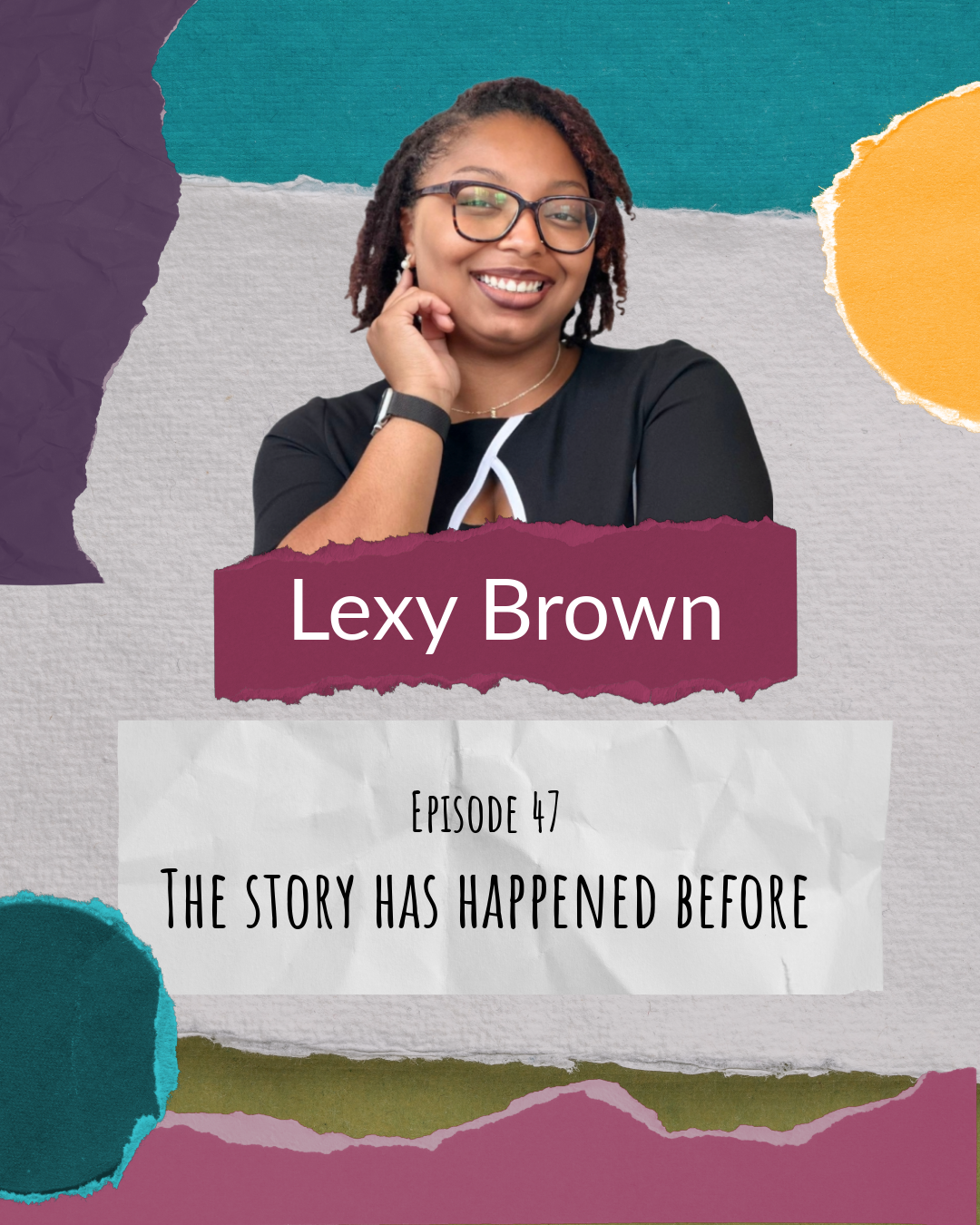
This week Dr. Alexus Brown, senior scientist at the University of Pittsburgh Center on Race and Social Problems, sociolinguist, and storyteller, joins Susan in the studio. Storytelling, creativity, and language are the topics of the day.



Susan:
Welcome to Who We Are Inside,
Susan:
a Cupid podcast.
Susan:
I'm so glad you're here.
Susan:
Hello,
Susan:
welcome to Who We Are Inside.
Susan:
I am so excited to have on the podcast today Dr.
Susan:
Alexis Brown.
Susan:
Dr.
Susan:
Brown is a sociolinguist,
Susan:
storyteller,
Susan:
and creative entrepreneur dedicated to amplifying black voices across research,
Susan:
education,
Susan:
and media.
Susan:
She earned her PhD in 2024 at 26.
Susan:
Mad props.
Susan:
That is,
Susan:
that's early.
Susan:
That's quick.
Susan:
I just completed an EDD and I'm like,
Susan:
no,
Susan:
that would,
Susan:
I was 37,
Susan:
so.
Susan:
Okay.
Susan:
Where her dissertation,
Susan:
What's the Deal for Real?
Susan:
Rap Music's sociolinguistic story explored how black language,
Susan:
rhythm,
Susan:
and identity shape rap lyrics.
Susan:
A proud summa cum laude graduate of Tuskegee University,
Susan:
she continues to merge scholarship and creativity to make culture come alive.
Susan:
Dr.
Susan:
Brown serves as senior scientist at the University of Pittsburgh Center on Race and Social Problems and
teaches,
Susan:
That's the Joint,
Susan:
the History of Hip Hop at Duquesne University.
Susan:
As founder and CEO of Lexycal Multimedia.
Alexus:
Lexycal.
Susan:
Lexycal?
Alexus:
Lexycal.
Susan:
Lexycal.
Susan:
That's so much better than how I was saying it.
Alexus:
A lot of people actually do Lexical,
Alexus:
and I'm like,
Alexus:
so it's a play on the actual word lexical,
Alexus:
but it's just spelled differently.
Susan:
Can you define what lexical is?
Susan:
Absolutely.
Susan:
I am not a sociolinguist.
Susan:
Understandable.
Alexus:
So lexical,
Alexus:
L-E-X-I-C-A-L,
Alexus:
is the words of the words related to a language.
Alexus:
And the L-E-X-Y is also of or related to the many facets of Dr.
Alexus:
Lexi.
Susan:
So like lexicon,
Susan:
is that related,
Susan:
the lexicon and lexical?
Susan:
Yes,
Susan:
yes,
Alexus:
yes.
Alexus:
So lexicon is like your mental dictionary.
Susan:
Yeah.
Alexus:
Mm-hmm.
Susan:
wow yeah words i it's been a while it's been like since the sat understandable understandable i feel like i'm
learning new vocabulary words all the time there was like a moment in time where i was reading i was like
studying actually i think it was for the gre and i was studying just like lots of vocab words and i was
reading things and just thinking like wow i'm understanding this on such a beautiful nuanced level that I
wasn't like a year ago because I didn't know all of these words and like why
Alexus:
you pick one versus the other yeah and then I just forgot all the vocabulary words and I'm back down to normal
yeah I say normal but like um I in high school I went to a school that taught us like the roots of words so
like Latin Greek yeah of words so that made it a little easier to understand like different words and i think
lexi is is a greek uh root so it means word oh my god that's so cool okay thank you you're welcome um all
right lexical multimedia yes she blends storytelling design and photography
Susan:
to help communities and creatives tell their stories with authenticity and intention um which is why we have
her on this podcast uh rooted in black creative traditions her work transforms media into a tool for truth
telling equity and joy whether designing teaching or vibing to her favorite rap verse dr brown is always um
tuned into the power of language culture and story dr brown thank you so much for being here today.
Susan:
So we started with a definition kind of by accident,
Susan:
but I'd like to keep going with that.
Susan:
So from your perspective,
Susan:
what is the definition of like story or storytelling?
Susan:
Just to kind of frame our conversation today.
Alexus:
So storytelling.
Alexus:
Well,
Alexus:
I guess we'll start with story.
Alexus:
Story is the words you would use to describe something.
Alexus:
So that could be something,
Alexus:
someone,
Alexus:
some aspect.
Alexus:
So that's really all a story is.
Alexus:
It's just words that have meaning,
Alexus:
that have meaning to a specific thing.
Alexus:
So storytelling is just using those same words to let other people know what is the meaning.
Alexus:
So story is meaning making.
Alexus:
Yes.
Alexus:
Is that a fair?
Alexus:
Yeah.
Alexus:
Narrative is another good way to look at it too.
Susan:
How did you first become interested in storytelling?
Alexus:
I was an avid reader.
Alexus:
I learned how to read from the dictionary in the Bible.
Alexus:
So you can only understand that I'm big on words.
Alexus:
So I even currently own probably over 400 books now,
Alexus:
personally.
Alexus:
I'm slowly getting back into,
Alexus:
and I mean slowly,
Alexus:
slowly getting back into recreational reading.
Alexus:
So it used to be very therapeutic for me.
Alexus:
It was a form of escapism.
Alexus:
I was a big fantasy love novel type of person.
Alexus:
And so like I had,
Alexus:
I'm just now rereading the Percy Jackson series from like middle school,
Alexus:
which is based on like Greek mythology.
Alexus:
And I think the second series is on like more Roman mythology.
Alexus:
And then they go into like Egyptian mythology.
Alexus:
Like there's three different series connected to it.
Alexus:
So I'm big on like mythical stories,
Alexus:
origin stories.
Alexus:
But what I love about those stories and how I became to,
Alexus:
I will say,
Alexus:
like imbued in my work is when you read a good book,
Alexus:
you're locked in.
Alexus:
You are transported into a world.
Susan:
Yeah.
Alexus:
And you can imagine what these people look like,
Alexus:
what they sound like,
Alexus:
what the food tastes like,
Alexus:
what the setting looks like.
Alexus:
And that can be so powerful,
Alexus:
especially to people that don't have places to go.
Alexus:
So that's a lot of the reason why I turned into books a lot when I was younger.
Alexus:
It was a form of escapism.
Alexus:
So why not do something that I enjoy,
Alexus:
but also not just telling my story,
Alexus:
but telling other people's story and being kind of like a steward of that story,
Alexus:
if that makes sense.
Susan:
I love that word,
Susan:
being a steward of stories.
Susan:
I'd like to think that Cupid is like a steward of stories.
Alexus:
Absolutely.
Susan:
Because,
Susan:
yeah,
Susan:
there are things that should be cherished and honored and respected.
Susan:
And I feel like so often,
Susan:
especially with,
Susan:
no pun intended,
Susan:
but like stories on Instagram,
Susan:
for example.
Susan:
Absolutely.
Susan:
You can just like commoditize your story and just put it out there as if like it has no inherent value or
meaning.
Susan:
So yeah,
Susan:
I'm going to borrow that.
Alexus:
Absolutely.
Susan:
Stewards of stories.
Susan:
Yes.
Susan:
So you said that you just loved it and that was sort of your impetus for kind of centering stories in your
career.
Susan:
Tell me your story a little bit,
Susan:
if you don't mind.
Alexus:
Oh,
Alexus:
no,
Alexus:
no,
Alexus:
no,
Alexus:
not at all.
Alexus:
where do I start?
Alexus:
I think that's always the question when somebody's like,
Alexus:
where do you start with the story?
Susan:
I believe the answer is at the beginning.
Susan:
At the beginning,
Alexus:
you know,
Alexus:
on a Sunday,
Alexus:
August 17th.
Alexus:
Just kidding.
Susan:
Are you a fellow Leo?
Alexus:
Yes,
Alexus:
I am.
Susan:
Okay,
Susan:
hello.
Susan:
I'm August 20th.
Alexus:
Oh,
Alexus:
love.
Alexus:
Good company.
Alexus:
Almost was in the Virgo space.
Alexus:
Yeah,
Alexus:
yeah.
Alexus:
But yes.
Alexus:
So I,
Alexus:
there's so many aspects to my story.
Alexus:
So where I started,
Alexus:
we'll fast forward a little bit.
Alexus:
So I was kinship adopted by my aunt and uncle,
Alexus:
which love,
Alexus:
they were my mom and dad.
Alexus:
I,
Alexus:
my biological parents,
Alexus:
they were drug addicts.
Alexus:
So that becomes complicated.
Alexus:
So won't get too much into that.
Alexus:
And I'm only just now starting to tell that part of my story,
Alexus:
if that makes sense.
Alexus:
So learned how to read and walk slowly.
Alexus:
I was one of those kids that I was carried up until after my first birthday.
Alexus:
I really wasn't walking or crawling.
Alexus:
was scared of people.
Alexus:
And I,
Alexus:
it took me a while to talk.
Alexus:
But I'm sure if you ask my parents now,
Alexus:
once I started talking,
Alexus:
I didn't stop.
Alexus:
So I just had to be in the right space in the right environment.
Alexus:
So that was the beginning.
Alexus:
I went to,
Alexus:
I was born and raised in Pittsburgh.
Alexus:
So I went to a small Catholic school from kindergarten to eighth grade,
Alexus:
but even preschool,
Alexus:
I went to school down the street from my house,
Alexus:
this place called Young's Daycare.
Alexus:
No longer exists,
Alexus:
but I will always remember my pre-K teacher,
Alexus:
Miss Mila.
Alexus:
She taught us Spanish and I can still count from one to 10 for that reason.
Alexus:
I can do a lot more than that now,
Alexus:
but yeah,
Alexus:
I love Miss Mila.
Alexus:
I actually have a picture that she drew of me when I was that young.
Alexus:
It's in my parents' house somewhere.
Alexus:
So from a young age,
Alexus:
I loved to learn.
Alexus:
And my parents made sure that I was in the best places to do that.
Alexus:
So went to a K-3-8 school in Wilkinsburg called St.
Alexus:
James School.
Alexus:
It is now Sister Theoboma Catholic Academy.
Alexus:
It switched to that in my eighth grade year.
Alexus:
I graduated valedictorian,
Alexus:
which was like,
Alexus:
I didn't even know you could graduate valedictorian at that time.
Alexus:
And then in high school,
Alexus:
I went to Trinity Christian School.
Alexus:
And that was an interesting experience.
Alexus:
So kindergarten,
Alexus:
I mean,
Alexus:
kindergarten through eighth grade,
Alexus:
it was a primarily black and minority served population of at least the students.
Alexus:
I had one black teacher from a young age who became my piano teacher,
Alexus:
who is now my friend.
Alexus:
Shout out to Carolyn Pertit Johnson.
Alexus:
So that was like my first entrance into music,
Alexus:
which becomes important later in the story.
Alexus:
So I was classically trained in piano from the age of six or...
Alexus:
About 12 years.
Alexus:
So math.
Susan:
18?
Alexus:
Yeah.
Susan:
Six to 18.
Susan:
No,
Susan:
I got you.
Alexus:
Around there.
Alexus:
Yeah.
Alexus:
So that's how long I was classically trained.
Alexus:
And she really introduced me to that.
Alexus:
So she taught us a lot about jazz because she was a jazz musician.
Alexus:
Taught us a lot about jazz,
Alexus:
classical music,
Alexus:
like all the works,
Alexus:
you know,
Alexus:
the things that you learn over time.
Alexus:
I was in the choir.
Alexus:
So that was a big part of my story.
Alexus:
Another big part of my story was I grew up in the Baptist Temple Church community.
Alexus:
So my grandma took me to all the choir practices,
Alexus:
Bible study and things like that.
Alexus:
She was very avid in the church.
Alexus:
And it will always be my home.
Alexus:
So I could still go there and people would say like,
Alexus:
oh,
Alexus:
Lexi,
Alexus:
how are you?
Alexus:
house of family and all these things and it always feels like coming home um so those are two big parts of my
life and then went on to high school where it was a large bit of a culture shock because it was a k-12 school
and when you go to a k-12 school you have people that have been there since kindergarten right and have any
friends i didn't really have any friends uh middle school i had one friend who I still maintained who's my
best friend and I had like other like closer friends at the time but
Alexus:
I really only had like one friend that maintained as strong as it was yeah I'll say that because I don't want
to say like oh I had no friends that wasn't really my story um who her name happens to be Alexis as well so
we've been best friends since uh I was four but all of a sudden I go to school and some people uh from my old
school came uh but we weren't the closest we got a little closer in high school but I'd like to think that it
might have been more about survival because it was a predominantly
Alexus:
white space we had white teachers yeah um and I was the smart kid So there was only five or six of us in my
high school class,
Alexus:
five or six black people in the high school class that I was in.
Alexus:
And I'm looking around.
Alexus:
I'm like,
Alexus:
who do I want to be?
Alexus:
And that's hard when you're not really fitting in with the black students.
Alexus:
You're not truly fitting in with the white students,
Alexus:
but you're in all the honors courses and things like that.
Alexus:
So those are most of the people that you're around.
Alexus:
So you have to find some way to get along with them and,
Alexus:
I don't know,
Alexus:
like coexist.
Alexus:
Yeah.
Alexus:
And I think I did make some friends along the way to a certain extent.
Alexus:
I don't think I've retained many of those closer friendships.
Alexus:
Ran track in high school because even though I never did sports in my life,
Alexus:
my parents were like,
Alexus:
well,
Alexus:
you're going to a new school and you need to do something.
Alexus:
And I'm like,
Alexus:
well,
Alexus:
what is there to do?
Alexus:
So I tried out for volleyball right before I started going to school there.
Alexus:
Got cut from the team.
Alexus:
I mean,
Alexus:
I wasn't good at it.
Alexus:
You tried,
Alexus:
though.
Alexus:
At the time,
Alexus:
it was hurtful because I got cut on my birthday.
Alexus:
But,
Alexus:
like,
Alexus:
it got to a point where I was just like,
Alexus:
okay,
Alexus:
well,
Alexus:
I got to make do.
Alexus:
And I did make do for four years.
Alexus:
Made do,
Alexus:
but it was hard.
Alexus:
it was hard and when you don't really know yourself because you grew up as always the teacher's pet so I was
always a really good student always got good grades um and in my 10th grade year was it my 10th grade year it
was either 10th grade or 11th grade my grandmother passed away and it let me backtrack just for a second so my
biological mother she passed away when I was six uh my aunt who was one of my best friends my aunt Stephanie
uh she passed away when I was 11 or 12 my grandma passed away
Alexus:
when I was 15 so it's just like ticking down the line of mother figures yeah and I think that was a big reason
why I struggled with who I was because when you're dealing with so much grief as a young person you're like
what you're thinking all these big questions like what do I want my story to look like when I'm older like
when when I go back and and talk about like what are the things that are like the places I hang my hat on
where are my signposts and for a long time I wouldn't say a lot of it
Alexus:
but I've just recently started saying like after obviously I make friends and they're like you should tell
people that like that's that's a that's a part of your story and that's not something that you should put
behind a wall yeah um so again I'm in high school and I don't really I don't really know how to handle all of
that grief because they don't teach you how to handle grief they don't um so you know I went through a really
deep depression my 11th and 12th grade year and I may do you know as
Alexus:
you do this is like I have to keep going yeah um there's i didn't want my story to end there uh so that's what
really kept me going and so i went to tuskegee i ended up getting a full ride uh full ride plus fees so i've
actually never had student death uh which i know is like unheard of um but you earned it I did I mean let's be
fair you earned it yeah yeah yeah I I I went back and took that ACT I think twice I only took the SAT once the
SAT for whatever reason the SAT did not vibe with me um I it
Alexus:
doesn't vibe with a lot of people I think that's why many universities and colleges are like test optional now
right yeah and now they do test optional after you've like suffered and toiled and correct trialed yes because
they did the same thing with the gre after a grad school like shut yes a lot of a lot of grad schools don't
even need the gre anymore we were just talking about how like the gre is like oh yeah we were toiling over
that it was crazy so many flashcards oh it's so many flashcards
Alexus:
i had the big old princeton review book and i was doing it was bad but um ended up going to a college at
Tuskegee which if you didn't know is in Alabama so all of a sudden I grew up in this little bubble of the east
side of Pittsburgh and all of a sudden I was 14 hours away and I have a little bit of family and like
Birmingham which I mean is about an hour and some change away for Tuskegee but for the most part I didn't have
the family that I was used to and the tight-knit community from what I'm
Alexus:
hearing with your church community yeah yeah it was it was rough it was rough I my freshman year was not the
greatest but I ended up making some really close friends we just celebrated 10 years of friendship so it all
that to say is it did work out,
Alexus:
but I had a lot of bumps in the road.
Alexus:
I,
Alexus:
yeah,
Alexus:
I,
Alexus:
college was an experience as it is for most people.
Alexus:
College was an experience,
Alexus:
but it was a lot of finding myself because I lived with this one kind of idea of what being black meant as I
was growing up.
Alexus:
I got called like Oreo,
Alexus:
which is like you're white on the inside,
Alexus:
but you're black on the outside.
Alexus:
The words that I used,
Alexus:
I was always particularly verbose.
Alexus:
I loved vocabulary words.
Alexus:
And that's harmful because then you grow up with this idea of I'm not black because I like this or I talk like
this or I do these things but what going to school with the many laminations that you get at Tuskegee or any
HBCU for that matter or any predominantly like black spaces you see that there's so much more to culture and
being and belonging than just how you speak the music you listen to and it's not as one-sided so now I'm
talking to people that are obsessed with video games I'm talking to
Alexus:
people who are uber nerds like me I'm talking to people who love anime I'm talking to people who listen to
punk rock and metal every now and then and um or listen to all spectrum of music um and because I had that
experience I think I was able to more come into myself over those four years so by the time it came to grad
school and I um came back uh for my master's and my PhD at uh Pitt I more or less kind of knew who I was than
the pandemic kid and then you know all different things that was my this
Alexus:
second semester of my first year and it was a five-year program so I so sorry but the majority of that in
COVID which was an experience to say the least I live with my parents who are both of me you know compromised
um a lot of other complicated things happening at home and I did move out before um after a certain point
because you know it just gets to be too much when you lived on your own for four years and then come back to
your parents you're like I feel like I'm 16 again and it's not a fun time
Alexus:
because now I'm I'm 22 23 and all of a sudden I have to get permission to go places again oh yeah and it's
just like what do you mean and I'm getting asked you know the 21 questions who's going to be there or why are
you going to How long are you going to be?
Alexus:
What time are you getting back?
Alexus:
I was just like,
Alexus:
I'm an adult.
Alexus:
Like,
Alexus:
you just don't know what I was doing down at college.
Alexus:
And not to say,
Alexus:
like,
Alexus:
you know,
Alexus:
it was always something salacious.
Alexus:
But it was,
Alexus:
I was my own person.
Alexus:
I didn't have to check in with anybody.
Alexus:
But so that got hard,
Alexus:
as it would,
Alexus:
because it feels like a regression.
Alexus:
And then grad school,
Alexus:
hard.
Alexus:
And then studying what I study was harder because I study black creativity and identity and rap music lyrics.
Alexus:
That was my dissertation.
Alexus:
And having to defend that to people day in and day out,
Alexus:
why that was a worthy thing to study academically rigorous is the term they use rigorous.
Alexus:
And it gets difficult because when you're explaining such an obvious part of your culture to other people,
Alexus:
it gets demoralizing so many times.
Alexus:
You get so many people saying,
Alexus:
well,
Alexus:
you have to really lead them there.
Alexus:
Like you can't just say like,
Alexus:
oh,
Alexus:
if you think of style like from a typical way,
Alexus:
this is like actually a part of my dissertation.
Alexus:
In a typical way,
Alexus:
you could think of like a pimp.
Alexus:
So I talked about Money Mike from Next Friday.
Alexus:
Or was it Friday after next?
Alexus:
One of the two.
Alexus:
And like I gave like a whole example because I couldn't just say a pimp has a certain way of dressing.
Alexus:
I had to give an example.
Alexus:
I was like,
Alexus:
okay,
Alexus:
here's an example.
Alexus:
I hope you enjoy.
Alexus:
So all that to say,
Alexus:
like I'm here.
Alexus:
I've graduated.
Alexus:
I'm in the spaces that I'm in.
Alexus:
But it took a lot of wines in the road to figure out the story that I wanted to tell.
Alexus:
So that's just a little bit about kind of where I came.
Susan:
Thank you so much for sharing that with me.
Susan:
I mean,
Susan:
I think that I'm seeing these moments and how it kind of comes into the work that you do,
Susan:
or at least the little bit that I'm aware of in terms of identity and music and community and storytelling and
joy.
Susan:
I just,
Susan:
yeah,
Susan:
I really appreciate you sharing all of that.
Susan:
I'd like to talk for at least a couple minutes about this idea of having to prove the worthiness of your
subject of study.
Susan:
Can you say more about that?
Alexus:
Absolutely.
Alexus:
So one of the hallmark things that I talked about in my dissertation was rap music is a linguistic art form,
Alexus:
very rich.
Alexus:
It's also a cultural art form that is also very rich.
Alexus:
So and of course,
Alexus:
that's like a big punchy statement to people.
Alexus:
Like it's obvious to me.
Alexus:
Like when you think of music,
Alexus:
it's okay,
Alexus:
there's words in it.
Alexus:
So of course it would be a linguistic art form.
Alexus:
And it's influenced by the world around it,
Alexus:
whether that is somebody's story,
Alexus:
whether it was technically somebody else's story.
Alexus:
It could look at the way of the world that we live in.
Alexus:
So we're thinking of a Kendrick.
Alexus:
We're thinking of,
Alexus:
you know,
Alexus:
J.
Alexus:
Cole,
Alexus:
who sometimes talks about like,
Alexus:
you know,
Alexus:
the deeper things,
Alexus:
Rhapsody.
Alexus:
Um,
Alexus:
so to me,
Alexus:
that was an obvious statement.
Susan:
Yeah.
Alexus:
For 191 pages,
Alexus:
I told people like,
Alexus:
I think it's obvious,
Alexus:
but let me bring you where I am.
Alexus:
So that it's difficult because you ever tried to explain the intricacies of what you do to a child?
Alexus:
Yes.
Alexus:
It's difficult because you're so into it that you have to take 10 steps back.
Alexus:
And it's like,
Alexus:
OK,
Alexus:
how do I put this in terms that other people would understand?
Alexus:
Because nobody else cares.
Alexus:
That's the one thing that I learned.
Alexus:
And it is so hard to get into your brain.
Alexus:
Like nobody else cares about what you do.
Alexus:
Nobody else cares about those things.
Alexus:
But they care about what they care about.
Alexus:
So you have to tap into what they care about.
Alexus:
So I had to go back and reach into the theories of yore and kind of bring them.
Alexus:
OK,
Alexus:
here's a piece here.
Alexus:
So I was talking about the notion of style.
Alexus:
It's been debated among different interdisciplinary communities.
Alexus:
I was both linguistic and non-linguistic.
Alexus:
And on the other side of that,
Alexus:
I was also talking about creativity and identity.
Alexus:
All things that have multiple definitions depending on who you ask.
Alexus:
Right.
Alexus:
And you have to bring them into saying like,
Alexus:
hey,
Alexus:
there's this definition.
Alexus:
There's this definition.
Alexus:
Creativity can just mean doing things.
Alexus:
Or style can just,
Alexus:
a way of talking,
Alexus:
a way of dressing.
Alexus:
But how I'm thinking of it is these types of ways.
Alexus:
So I'm looking at creativity of the lens of,
Alexus:
you have structural creativity.
Alexus:
So you have like what makes a thing a thing,
Alexus:
right,
Alexus:
at its baseline,
Alexus:
at its core.
Alexus:
So in linguistics,
Alexus:
that looks like your basic syntax,
Alexus:
so your basic grammar,
Alexus:
the words that you use.
Alexus:
Sure.
Alexus:
So how do I put those together to make this thing?
Alexus:
But then you have this expressive creativity,
Alexus:
right?
Alexus:
And that's how you can tweak and push the mold.
Alexus:
um and and it's what makes the thing unique so just because I made a song because it has these different
elements it has instrumentation it has lyrics if we're talking about lyrical music it has certain types of
beats it's in a certain time signature that's what makes it this song but what makes it me what I talk about
yeah um how I talk about it what are Am I using wordplay?
Alexus:
Am I using?
Alexus:
So you have to go that granular to get people to understand this is how I'm thinking of these concepts.
Alexus:
And that is tiresome.
Susan:
Yeah.
Susan:
And I imagine I don't want to presume,
Susan:
but I imagine that,
Susan:
you know,
Susan:
Pitt is a PWI,
Susan:
primarily white institution.
Susan:
So I imagine a lot of the folks that you were having to explain this to were white.
Alexus:
Yes.
Susan:
And that's hard.
Alexus:
Yes.
Susan:
Were they men?
Susan:
Not always?
Susan:
Not always.
Alexus:
So I'll talk about my committee.
Alexus:
So I have my advisors,
Alexus:
Dr.
Alexus:
Shalom Gooden.
Alexus:
So she is a Jamaican woman,
Alexus:
so diasporic black.
Alexus:
So we end up having differences in like cultural things.
Alexus:
But for the most part,
Alexus:
we leveled.
Alexus:
And then I have Dr.
Alexus:
Scott Kiesling,
Alexus:
who was also on my committee.
Alexus:
I had Bill Scott from the English department and Melinda Fierke from the linguistics department.
Alexus:
So Melinda,
Alexus:
Bill and Scott were all white.
Alexus:
So that's who you have to deal with.
Alexus:
And I will say that they pushed me to think deeper.
Alexus:
I mean,
Alexus:
Bill Scott even studied,
Alexus:
studies African-American literature and things like that.
Alexus:
But at the end of the day,
Alexus:
you know,
Alexus:
you are still explaining cultural concepts to someone who is outside of the culture.
Susan:
Right.
Alexus:
So,
Alexus:
yeah,
Alexus:
I mean,
Alexus:
it was half and half,
Alexus:
like male,
Alexus:
female.
Alexus:
But as we know,
Alexus:
these are male-dominated fields.
Alexus:
So at the end of the day,
Susan:
I'm going to end up talking to more males than I do females.
Susan:
Right.
Susan:
Yeah,
Susan:
so there's a lot of layers of complexity there.
Alexus:
Yes.
Susan:
And what I'm hearing you say is a story is just as much about how you choose to tell it as it is about,
Susan:
like,
Susan:
what you are telling.
Alexus:
Absolutely.
Susan:
And,
Susan:
you know,
Susan:
I'm curious,
Susan:
like,
Susan:
what would be an example of,
Susan:
like,
Susan:
a typical dissertation in your field that,
Susan:
like,
Susan:
wouldn't need to be defended,
Susan:
I guess,
Susan:
or,
Susan:
like,
Susan:
justified as much as yours?
Alexus:
I think it depends because the one thing about linguistics is it can go to so many different areas because
linguistics is language patterning.
Alexus:
Yeah.
Alexus:
But I would say anything that exists in your hegemonic kind of European culture.
Alexus:
You know,
Alexus:
there's some sex.
Alexus:
I see people looking at like the Czech Republic or they'll look at Armenian or things like that.
Alexus:
So,
Alexus:
you know,
Alexus:
and that's outside of the scope of what you usually see.
Alexus:
But it's there's a lot of similarities there because a lot of things,
Alexus:
everything in linguistics is based on your heteronormative white male.
Alexus:
That is your typical subject.
Alexus:
I mean,
Alexus:
that's with anything.
Alexus:
Yeah.
Alexus:
But especially in linguistics,
Alexus:
so they're looking at white male language.
Susan:
Right.
Alexus:
So even in the notions of looking at women's language,
Alexus:
it's kind of an afterthought.
Alexus:
Looking at any language that's outside of Indo-European languages,
Alexus:
afterthought.
Alexus:
And it's a lot younger.
Alexus:
And linguistics in and of itself is a young field.
Alexus:
Right.
Alexus:
It really started existing.
Alexus:
The linguistics as we know it started more in the 1960s and 70s.
Alexus:
So it was relatively recent as a field.
Alexus:
And it spent a lot of its time in the field trying to appeal to the sciences.
Susan:
So who's your baseline for the sciences?
Susan:
As a physician assistant and a like fledgling researcher.
Susan:
Yeah.
Susan:
Yeah.
Susan:
You know,
Susan:
it's older white men,
Susan:
and it's a very,
Susan:
like,
Susan:
positivist,
Susan:
post-positivist way of thinking.
Susan:
Yeah,
Susan:
I'm trying to bridge that gap,
Susan:
too,
Susan:
because I'm a qualitative researcher.
Alexus:
I am as well.
Susan:
Yeah,
Susan:
I want to do,
Susan:
like,
Susan:
you know,
Susan:
some constructivism,
Susan:
some,
Susan:
like,
Susan:
critical paradigms.
Susan:
And,
Susan:
yeah,
Susan:
it's a tough place to walk.
Susan:
I get it.
Susan:
What?
Susan:
So as much as I would love to read your dissertation,
Susan:
I probably will not.
Susan:
I understand.
Susan:
And so what are like some takeaways you can share with us?
Susan:
Like if we if you had like a couple to offer.
Alexus:
So one of the main things,
Alexus:
like I said earlier,
Alexus:
was rap is a rich linguistic and cultural art form.
Alexus:
Even when I'm teaching,
Alexus:
that's like one of the first things that I teach my students.
Alexus:
And that comes with many layers.
Alexus:
that comes with the ideas of creativity,
Alexus:
the ideas of style,
Alexus:
the ideas of identity making that can happen.
Alexus:
And one thread that I followed was how expansive style is and different of a notion in rap music.
Alexus:
So hip-hop as a concept,
Alexus:
or the hip-hop nation,
Alexus:
We'll start there with H.
Alexus:
Samuel Leem,
Alexus:
who is a prominent racial linguist in this field,
Alexus:
a hip hop linguist.
Alexus:
And he talks about the hip hop nation and how it's everyone who participates in hip hop culture.
Alexus:
So that looks like the style of dress,
Alexus:
the music,
Alexus:
which is typically rap music or like adjacent forms and the language,
Alexus:
which is derived from African-American language.
Alexus:
so with it being such an expansive form that includes all these things you have to look at rap as not just
this socio-political folklore you also have to look at it as entertainment because not every rap song not
every song that you hear right is going to have some deeper message like oh yeah that that's the thing that
that is speaking to the pulse of society right now sometimes it's just to get you up and dance that's right uh
i mean we're thinking of uh people like uh missy elliott we're thinking
Alexus:
of the different dance songs uh like jay-z's dust your shoulders off i mean yeah that has like a cultural
meaning but we're not really thinking about all that or uh outcast hey y'all yeah although he is talking about
deeper things but he's like oh y'all don't hear me y'all just want to dance yeah because it is a dance tune
but there it's it's somewhere in the middle and because it has so many facets and so many aspects like a
diamond you can't look at blackness as something that is just one size
Alexus:
one view it has so many facets and to really understand what you're looking at a rich linguistic and cultural
art form such as rap music you have to break it down to the different facets and looking at it from all
different types of ways to really understand the story that it's giving you.
Susan:
Yeah.
Alexus:
So I think those are my like main takeaways.
Susan:
You know,
Susan:
I'm thinking about how you were saying that,
Susan:
you know,
Susan:
in your four years of college,
Susan:
you had to unlearn this sort of singular identity of what it means to be black.
Susan:
Or I imagine even just African American in the U.S.
Susan:
because obviously there's lots of other culture outside of African American culture that's black culture in
the U.S.
Susan:
And then how your sort of exploration of rap music unveiled or maybe just brought to light all of these
different facets.
Susan:
And it was like you took those maybe,
Susan:
what's the word that I'm looking for?
Susan:
like informal learnings from college and turned those into formal learnings in your dissertation.
Alexus:
Absolutely.
Susan:
That is so cool.
Susan:
Yeah.
Alexus:
I always said,
Alexus:
so I knew from the age of eight that I wanted to be a doctor,
Alexus:
just not the kind that,
Alexus:
you know,
Alexus:
cuts you up and does all the things with the blood and the bodily fluids and things.
Alexus:
But I knew I wanted doctor in my name.
Alexus:
And I achieved that.
Alexus:
But the only way I knew I was going to achieve that,
Alexus:
by the time I got to grad school,
Alexus:
I said,
Alexus:
I have to pick something that I won't get tired of because this wasn't my first brush at like trying to,
Alexus:
uh,
Alexus:
find a topic.
Alexus:
When I came in,
Alexus:
I was going to do educational policy.
Alexus:
I was going to change the world.
Alexus:
I was like real big activist.
Alexus:
Like I said,
Alexus:
I'm multicultural education and I'm going to transform the educational policy.
Alexus:
Sorry for all the educational policy researchers out there,
Alexus:
but for me,
Alexus:
that's boring.
Alexus:
I said oh gosh this is a snore fest um and I spent the first semester is like I don't want to do this I said
I'm going to get tired of this I'm going to be one of those people that uh get one year into their
dissertation it's like I don't want to study this anymore now I'm stuck yeah I said I don't want to be stuck
so I think in a weird way COVID gave me this excuse to be as playful as possible because you know your
teachers were uh a little bit more lax because they're also burnt out right so i
Alexus:
was able to pick things so uh i was taking an advanced social linguistic class and an advanced syntax class so
one's grammar and other ones like theory and all this thank you for defining that yes yes no i i fully expect
that people don't don't know what syntax is even though we all like did the grammar trees when we were little
and things like that but um so i'm looking at advanced grammar for for nerds i like to call it i love it and
uh we came to both our final papers in that class and my theoretical
Alexus:
class for sociolinguistics which is just the social patterning around language uh i was like okay let me see
what I want to do since I don't want to do educational policy anymore and I gotta stop writing term papers
about it yeah so I said okay I talked to my teacher Dr.
Alexus:
Karen Park and I said okay you have this choice kind of like a choose your own story type of term paper what
does that look like she was like well look for something that you want to study and uh talk about what it has
to do with syntax basically so I found this little pocket of a rap music study and it was like a working paper
which is like a pre-published paper somebody might have did a presentation on it maybe extended a little bit
on the syntax the grammar of rap music and I was like well of
Alexus:
course grammar and grammar is in rap music like you can tell from your ear like oh this is a bad rap even if
you're not like super well versed in what what it means to be a good rapper or a bad rapper right you can be
like this doesn't work might not know why but you're having some type of speaker judgment so I was like well
why aren't there more papers on this like there's definitely a notion because the thing that's in syntax is
this idea well one of the parts of syntax is this idea of there's
Alexus:
certain like unalienable things about language so that you learn language when you're a baby uh you create all
these novel sentences and you can judge them like based on that idea there's a lot more aspects so sorry to
the syntacticians um just summarizing sorry um and i said okay well what does that look like for rap music
lyrics uh because you could do things like sampling and the paper that i was looking at talked about like
rhyme schemes and it was very like quantitative and i'm like okay that's
Alexus:
cool or whatever but we're not talking about sampling sampling is core to not only uh african-american oral
traditions so such as like we had uh african griots so the storytellers yeah they're taking stories that
they've heard telling them in certain ways that make sense for them to tell like the aspects yeah of of these
things and literacy wasn't really a thing there's a lot of freestylers and they might go on beat that they've
heard before how does that influence the notion of creativity so that's
Alexus:
where i started and then my other paper in social linguistics was um looking at mac miller's frick park market
and how he identifies himself as a pittsburgh boy in his early music yeah like he's just just a pittsburgh guy
what does that look like and how is he getting fans specifically from the Pittsburgh area because as we see
the late Mac Miller he's still very popular um so that that kind of started me on this path and I was just
like so nobody has really studied this the way I'm studying it okay
Alexus:
that's that's where I started and then obviously I exploded after that and now I listen to music differently
and all these different types of things and now you're the I don't want to say it wrong the uh senior
scientist yes for the University of Pittsburgh center on race and social problems yes right in the school of
social work yeah so that i'm not really using the dissertation so as as you if you don't know like when you
get your dissertation it's on the super duper niche topic and you may or
Alexus:
may not get a job in working with that distinctly so there i'm doing um strategic partnerships and uh
development grant writing I'm also the editor editorial manager of the race and social problems journal I also
do a curriculum development for the racial equity consciousness institute and but one thing that never left
and I guess I really found my way was that aspect of storytelling yeah so why is so important that we look at
all aspects of a culture before we start to tell anybody else's story
Alexus:
so that looks like talking to community,
Alexus:
seeing what they need.
Alexus:
So for all the people that are working on a dissertation,
Alexus:
it feels really hopeless.
Alexus:
You use those skills elsewhere,
Alexus:
I promise.
Alexus:
It might just be the basis level of those skills,
Alexus:
but you find something that you like to do and you will figure out how to transfer those skills.
Alexus:
So a lot of people say like,
Alexus:
well,
Alexus:
are you fulfilled in what you do?
Alexus:
Because you're so unlike what you were studying before.
Alexus:
I'm like,
Susan:
well I still listen to music and I still talk to community and I still tell stories so I mean I think I'm
pretty darn as close as I'm going to be for what I do right now yeah yeah and I you know we're coming towards
the end of this project we're going to be done with well our funding will be done with Cupid in June of this
year it's now February so it's been a rough ride we started in 2022 um 21 well it's been there's been a couple
iterations but i think this one was 2022 and so we went from a being
Susan:
in a space where storytelling around particularly like counter narratives was very much in vogue right like
you know and then it became less and less and less supported,
Susan:
cherished,
Susan:
being allowed to be visible as time has gone on.
Susan:
And so it's really got me thinking,
Susan:
you know,
Susan:
about the power of storytelling and the limitations.
Susan:
And I'm curious kind of what your thoughts are on that.
Alexus:
So I think this whole episode really talked about the power of what storytelling could do and and change lives
and inspire people but there are vast limitations to telling your story because what part of your story could
you can you should you tell to achieve certain things in your life um and it's not only tied to achievement
but it's also tied to is this going to become a problem for somebody else because we don't exist in a vacuum
right uh my story could also be 10 other people's stories so you
Alexus:
also that's probably why on some points i'm i'm pretty cagey about what my story is because it it impacts
other people it impacts not just me but it's still a part of my story but uh you don't want to tell
everybody's business Right.
Alexus:
So it's not only that you could end up helping or hurting people.
Alexus:
You could.
Alexus:
And it's not just people connected to you.
Alexus:
You could hurt communities,
Alexus:
especially if you're coming from an uninformed perspective.
Alexus:
You could hurt potential partnerships that you didn't even know you could have had by telling certain aspects
of your story or not even just your story,
Alexus:
but how you live your life.
Alexus:
what are your values and things like that so you have to take all that into account i mean we're we're seeing
in real time we have uh don lemon being arrested just for being a storyteller um but one inspiration i will
take from him is that he never stopped telling the story he never stopped trying to tell the stories that
matter and i think that's what's important there's always going to be limitations to what you can do just like
in a dissertation you can only write but so much i probably could
Alexus:
have written a thousand page book on what i did i could have did all these different types of case studies and
things like that but you have to give people enough of a taste to understand the story and the world building
going back to you know like your Percy Jackson series and things like that uh you know if you're seeing this
Rick Riordan love you um I can only hope no seriously uh might tag him or something there you go so not you
you could build this world up you could tell this story how you
Alexus:
tell it in the different mediums I think is what's more important the your your story is bigger than its
limitations so you got to find some way to skirt around it and still mold the thing that makes sense so you're
not missing core parts of your story you're still getting it out but it's getting to the people that matter in
the ways that it can so kind of leveraging your story for different audiences and being mindful of that.
Susan:
Yeah.
Susan:
I think that makes sense because I think some,
Susan:
some of your story is not for everybody.
Susan:
It's just yours.
Susan:
Um,
Susan:
and you certainly don't want to like exploit your own story,
Susan:
which I think is what happens often.
Susan:
Um,
Susan:
in,
Susan:
oh my goodness.
Susan:
I can't remember what I interviewed,
Susan:
um,
Susan:
a wheelchair user and he called it something.
Susan:
um inspiration porn yes i think was the name absolutely yeah so that's i think that's an important
consideration so i'm gonna ask a really easy question okay it is february of 2026 mm-hmm so how would you tell
the story of right now in a couple minutes yeah that that that's a very easy question.
Alexus:
It's so easy,
Alexus:
right?
Alexus:
So easy.
Susan:
And no judgment for like whatever you leave out because I'm putting time constraints on it.
Alexus:
It's the story of as of now,
Alexus:
February 2026,
Alexus:
is nothing we have not seen before.
Susan:
That is true.
Alexus:
It might not be in our lifetime.
Alexus:
It might not be to this extent.
Alexus:
It might not be to the magnitude that we're seeing,
Alexus:
but the story has happened before.
Susan:
I love that.
Susan:
I'm going to share something.
Susan:
I was listening to,
Susan:
well,
Susan:
it's kind of a podcast.
Susan:
It's a letter that gets read.
Susan:
Heather Cox Richardson is a historian and she writes a letter called Letters from an American Every Day.
Susan:
You can sign up.
Susan:
I have no conflict of interest,
Susan:
although I love you,
Susan:
Dr.
Susan:
Richardson.
Susan:
But her today,
Susan:
or I think it was yesterday's letter,
Susan:
she was covering,
Susan:
I think it's in Surprise,
Susan:
Arizona.
Susan:
There's discussion about putting up like a warehouse,
Susan:
like a detention warehouse.
Susan:
And I think that I'm paraphrasing here.
Susan:
I listened to this before all my coffee was in my brain.
Susan:
So if I get any facts wrong,
Susan:
apologies.
Susan:
We will,
Susan:
of course,
Susan:
correct in the show notes.
Susan:
But I believe that like a thousand people turned up to the city council meeting because it was purchased by
the federal government.
Susan:
And so there were no,
Susan:
like the state couldn't impose or the city couldn't impose any sort of like restrictions.
Susan:
Yeah.
Susan:
So somebody in the council meeting told a story about the mayor of the town where the first concentration camp
was in Germany.
Susan:
That it was the first concentration camp that the U.S.
Susan:
Army liberated.
Susan:
I do not remember the name of the town.
Susan:
I'm definitely not going to remember the name of the mayor.
Susan:
But essentially they told the story about how they made the folks from this community walk through the
concentration camp after it was liberated and,
Susan:
you know,
Susan:
like own their part in their complacency.
Susan:
And the mayor went home.
Susan:
And I just want to do a quick trigger alert.
Susan:
I probably should have done that before I started talking about concentration camps.
Susan:
But there's going to be a suicide.
Susan:
so just pause if you um are triggered by that um but he went home and he committed suicide and i think that in
my mind like that's the power of story yes like we can talk about the millions of people who were you know
murdered in the holocaust we can talk about the hundreds probably thousands of you know black bodies that have
been murdered by police we can talk about you know the people,
Susan:
American citizens who have been murdered in Minneapolis.
Susan:
And somehow those numbers just aren't as powerful as one harrowing or like poignant story.
Susan:
Yeah.
Susan:
That's what I'm holding on to as the power of storytelling that like,
Susan:
I really want it.
Susan:
I really focus on how it can build cognitive empathy because I feel like we could all use more of that in our
lives.
Susan:
But I also think that it seems like we're hardwired to connect to story in a way that is different than
evidence or data or reporting that is more reserved or...
Susan:
I don't know what I'm trying to say.
Susan:
No,
Alexus:
I get what you're saying.
Alexus:
We're not really just connecting to a number.
Alexus:
We're connecting to a person.
Alexus:
Yeah.
Alexus:
So like I'll even put into the example of Bad Bunny's performance.
Alexus:
Yes.
Alexus:
Was amazing.
Susan:
I fell asleep putting my kid to bed and I missed it.
Susan:
It's OK.
Susan:
It's OK.
Alexus:
You'll probably find it on YouTube today.
Alexus:
I will find it on YouTube.
Alexus:
But even from the clips I saw because I didn't see the whole thing.
Alexus:
But I do love Bad Bunny's music.
Alexus:
Do I understand every aspect of Spanish?
Alexus:
No.
Alexus:
However,
Alexus:
the story that he told in that performance was beautiful.
Alexus:
it was this great thing bad bunnies for everybody yeah and he ain't speak one lick of english to quote uh to
quote a a thread that i saw last night he he he ain't speak a lick of english and i said that on purpose thank
you um and it was beautiful uh the i think it's his one song uh DTM don't crucify me it's something I wish I
took more photos that's like the English part of it the song is so beautiful I cried the first time I heard it
because literally the whole song is just like I wish I took more
Alexus:
photos I wish I hugged you more I wish I kissed you and it's the story of community I can get up and dance to
any song that is from a different era a different language and anybody can do that because music is how it
makes you feel so going back to what you're saying like the cognitive empathy and this idea of it's more about
how these things make you feel and that's how you built that relation point rather than this disconnected just
the numbers right the numbers can help absolutely um just like
Alexus:
the numbers of millions upon millions of people that saw bad bunny's super bowl performance and we'll continue
to see it that and we'll continue to see it because people can relate to the notion of just because of
somebody else's culture does not mean i can't find relation points right and really empathize with that person
that experience even if that's not 100 my story that's right so i i think that's really really really
important to say yeah thank you and i do plan on i was like really looking
Susan:
forward to it and then fell asleep it's fine i'm gonna watch it on youtube come come it comes to the best of
us sleep is the one thing we cannot avoid yeah well and taxes right yeah yes yes yes so I feel like we've
talked a lot about your your personal story how it relates to your story as a student and an academic and how
you're applying that now.
Susan:
What have we missed about kind of stories and the way that they shape how we see things?
Susan:
What haven't we hit on yet?
Alexus:
I think we did it in a roundabout way,
Alexus:
even with the most previous conversation,
Alexus:
was how we can use a story to bring people in to inspire others to do something or not do something.
Alexus:
So a big thing of what I do at Lexical Multimedia,
Alexus:
how you mess up your own business.
Alexus:
Lexical Multimedia is that we turn visions into visuals.
Alexus:
So what's going on in your head?
Alexus:
How can we make that translate to the message that you're trying to bring to the audiences that you're trying
to bring it to?
Alexus:
So what that looks like is relatability.
Alexus:
It looks like authenticity.
Alexus:
It looks like what are the important parts of what you're trying to carry on to inspire the sort of feeling
you want other people to feel.
Alexus:
So like,
Alexus:
for example,
Alexus:
when you look at my Instagram at Lexical Multimedia on Instagram.
Susan:
We'll link it.
Alexus:
And LexTheLinguist.com.
Alexus:
So what that looks like is,
Alexus:
and I had somebody else actually explain this to me a lot better than I could.
Alexus:
So even in my logo,
Alexus:
it balances the professional.
Alexus:
You got the straight upright.
Alexus:
It's a little slanted.
Alexus:
It's got the little italicized to it.
Alexus:
But with this graffiti multimedia.
Alexus:
So that's really to bring in the aspect of,
Alexus:
I hesitate saying grunge,
Alexus:
but more just like that what's considered unprofessional.
Susan:
Yeah.
Alexus:
And how we mash those together to create the message of,
Alexus:
I can tell that you're going to do good polished work,
Alexus:
but you're going to make it your own.
Alexus:
Somebody else explained that to me not too long ago.
Alexus:
And I said,
Alexus:
oh,
Alexus:
I didn't even realize.
Alexus:
You know,
Alexus:
when you choose things,
Alexus:
it's like,
Alexus:
oh,
Alexus:
because I like it.
Alexus:
But that's how powerful even just a logo can make you feel.
Alexus:
You look at McDonald's,
Alexus:
the M.
Alexus:
I'm sorry if you don't like McDonald's.
Alexus:
That's my example.
Alexus:
You look at the M and you're like,
Alexus:
ba-da-ba-ba-ba,
Alexus:
I'm loving it.
Alexus:
You're thinking of the French fries.
Alexus:
You're thinking of a McDouble.
Alexus:
And it makes you feel good.
Alexus:
You might think of a time that your mom took you to McDonald's or something.
Alexus:
You got a really good chicken nugget.
Alexus:
It was hot out the fryer,
Alexus:
but you didn't burn yourself because it was delicious.
Alexus:
And all these things.
Alexus:
And it makes you feel good.
Alexus:
And all these ideas and emotions are connected to just that one thing.
Susan:
Yeah.
Alexus:
Can bring up all of this different laminations of the parts of the story.
Alexus:
or if I say once upon a time,
Alexus:
brings up a whole lot of expectations of what the story is going to be.
Alexus:
And then you have those stories that break that mold a little bit.
Alexus:
It might actually be a really sad story.
Alexus:
It's not going to have a happily ever after like you thought,
Alexus:
but it still might have magical beings.
Alexus:
It still might have your prince and your princess.
Alexus:
It still might have all these different notions.
Alexus:
So as you get really,
Alexus:
you could get really granular in this,
Alexus:
right?
Alexus:
Because it's just when it comes to looking at the differences of how certain stories get told,
Alexus:
you can get as small as that,
Alexus:
but you can even get as large as what are the words I'm using in this particular caption.
Alexus:
But all of these things make the story,
Alexus:
make the message of what you want to transmit to different audiences.
Alexus:
So that's what I try to teach any of my clients,
Alexus:
just that you have to be intentional in this work.
Susan:
Yeah.
Alexus:
Or you're not going to speak to the people that you want to speak to,
Alexus:
especially if you want to go into different markets.
Alexus:
You want to scale and things like that.
Alexus:
You might have to think of maybe if I use this purple or if I use this logo or if I use these things,
Alexus:
I might not get the people that I want to think of.
Susan:
Yeah.
Alexus:
And maybe that's a good thing.
Alexus:
Or maybe that's a bad thing.
Alexus:
But all of that takes intention.
Alexus:
So the intention in storytelling and narrative building has to be there.
Susan:
Yeah.
Susan:
Oh,
Susan:
gosh.
Susan:
Sam,
Susan:
if you watch this,
Susan:
Sam is my media website designer.
Susan:
And we spent like a disgusting amount of time on colors.
Susan:
Oh,
Susan:
yeah.
Susan:
Like way too much time.
Susan:
But I was going for a feel.
Susan:
It had to have this feel to it that like I couldn't really put into words,
Susan:
but I knew that colors could get me there.
Susan:
So like,
Susan:
yes,
Susan:
yes,
Susan:
it needs to be intentional.
Susan:
And I think I love kind of your point about if you're telling your story,
Susan:
I really think we should either only tell our own stories or if we're going to tell someone else's story,
Susan:
make sure that we have a ton of,
Susan:
you know what?
Susan:
Yes.
Alexus:
If you're going to tell someone else's story,
Alexus:
the answer is don't.
Alexus:
Give them the mic.
Susan:
Who was I just listening to that talked about this?
Susan:
I can't remember who it was.
Susan:
Yeah.
Susan:
Yes.
Alexus:
That's the one thing I've learned in all of my study,
Alexus:
because when it comes to storytelling and narrative building,
Alexus:
the best thing you could do for somebody else is teach them how to tell their story.
Alexus:
Don't tell their story for them,
Alexus:
because at the end of the day,
Alexus:
I'll use Wicked as an example.
Alexus:
Literally the screenplay.
Susan:
Okay.
Alexus:
So the screenwriter for Wicked found out about the story of Wicked through like a drunk colleague.
Alexus:
So what happens in Wicked is not what happened in Wicked,
Alexus:
the book written by Gregory McGuire.
Alexus:
There's a whole lot of pieces missing.
Alexus:
But when you're drunk and you're telling a story,
Alexus:
you're going to miss out on things.
Alexus:
Right?
Alexus:
It's going to be this beautiful tale of friendship and overcoming and still have the allegories and things
like that.
Susan:
Yeah.
Alexus:
Wicked.
Alexus:
I think it's the life and times of the Wicked Witch of the West.
Alexus:
You're going to have those pieces,
Alexus:
but it's going to be missing some parts,
Alexus:
some crucial parts.
Alexus:
Yeah.
Alexus:
Crucial parts that make it not a kid's book.
Susan:
I see.
Susan:
Gotcha.
Alexus:
So instead of going to Gregory McGuire,
Alexus:
and I'm not saying this was the right answer,
Alexus:
But going to Gregory Maguire is like,
Alexus:
how do you want to tell your story on film?
Alexus:
Right.
Alexus:
He made his own story.
Alexus:
Now,
Alexus:
I ended up working out in this way.
Alexus:
And I would hope that there was some type of like resolution there and some sort.
Alexus:
And,
Alexus:
you know,
Alexus:
Wicked won a lot of awards.
Alexus:
But the best thing that you could do.
Alexus:
And this is also what I learned in my ASL class in grad school is not necessarily give them the mic,
Alexus:
but get them the stage.
Alexus:
And that's the best thing that you could do because if you're learning,
Alexus:
let's say,
Alexus:
to be an interpreter or something like that,
Alexus:
even when you're in spaces where there is an interpreter present,
Alexus:
you still talk to that person.
Alexus:
You don't talk to the interpreter.
Alexus:
Right.
Alexus:
Because all they're doing is translating.
Susan:
Yep.
Alexus:
They're a tool.
Alexus:
And that's what you have to place yourself in when you're telling somebody else's story.
Alexus:
You are a tool.
Alexus:
You might help them,
Alexus:
give them the tools to better transmit their story to different people.
Alexus:
But you are not telling their story.
Susan:
Yeah.
Susan:
Yeah,
Susan:
and I think about this as a qualitative researcher with,
Susan:
oh,
Susan:
I'm not good with the terms yet because I'm in my first advanced qual class right now.
Susan:
But when you like basically give your like analysis back to the participants to see if you got it right.
Susan:
Right.
Susan:
There's a term for that.
Susan:
I don't remember it.
Susan:
I will ask Dr.
Susan:
Weddle when I see her on Wednesday.
Susan:
But yeah,
Susan:
I love that.
Susan:
When you're about to tell someone else's story,
Susan:
just give them the mic and a stage.
Alexus:
Yes.
Susan:
Okay.
Susan:
Well,
Susan:
thank you.
Susan:
Of course.
Susan:
So much for being here today.
Susan:
This was like.
Susan:
Thank you for having me.
Susan:
What I needed on this cold Monday morning in February.
Susan:
Yeah.
Susan:
Also,
Susan:
I don't know.
Susan:
Can you like hold up your.
Susan:
I don't know if you can see it.
Susan:
Your water bottle.
Alexus:
It says I am black history.
Alexus:
And I love it.
Alexus:
It also has an Ivy leaf because I am a member of Alpha Kappa Alpha Sorority Incorporated.
Alexus:
And so I keep this with me because on those dark days where you don't think you're making much of a
difference,
Alexus:
I'm history.
Susan:
Amen.
Susan:
Thanks for being here.
Susan:
Of course.
Susan:
Thank you.
Susan:
Who We Are Inside is created and hosted by Susan Graff and Adriana Modesto Gomez da Silva in collaboration
with Karthik Hariharan and John Ginnan.
Susan:
Thanks for being here.
♪♪